Friday, December 20, 2013

To be open to Jesus requires self-judgment

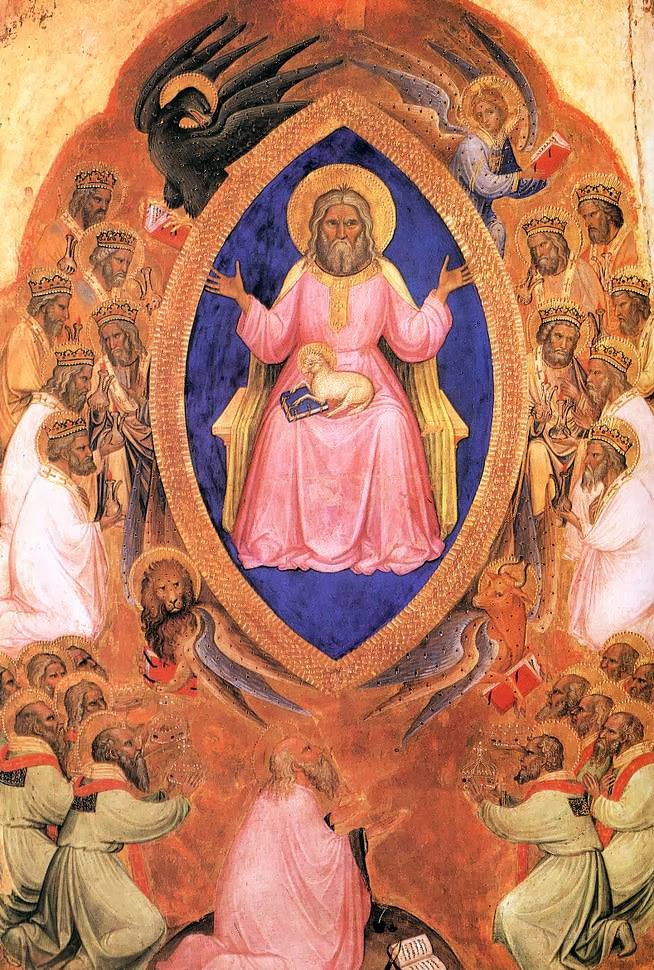
Back on 11 December, during his weekly Wednesday audience, Pope Francis delivered his final catechesis on the Creed with a reflection on the statement, "I believe in eternal life." Befitting Advent, he narrowed this down further to speaking about the Last, or Final, Judgment. According to the ancient teaching of the Church, taken directly from the words of our Lord Himself, this Final, or General, Judgment will occur when Christ returns in glory "to judge the living and the dead." This will be the time of the resurrection. As the Holy Father noted, it is difficult not to contemplate this day with fear.

Nonetheless, as Christians, it is a day to be eagerly awaited, excitedly anticipated, not feared. Really, for us, now, while Advent is certainly about celebrating and solemnly commemorating the Incarnation of the Son of God more than 2,000 years ago, it is more about awakening in ourselves the hope that this same Jesus will return in glory, to revivify living in the awareness of the end for which we are created, redeemed, and are, even now, striving to attain, namely union with God.

It should not be a day that Christians think about fearfully. Pope Francis noted,
the testimony of the first Christian communities resounds ever so evocatively. In fact, they usually accompanied the celebrations and prayers with the acclamation Maranatha, an expression composed of two Aramaic words which, according to how they are pronounced, may be understood as a supplication: “Come, Lord!”, or as a certainty nourished by faith: “Yes, the Lord is coming, the Lord is near”. The whole of Christian revelation culminates in this exclamation, at the conclusion of the marvellous contemplation which is offered to us by John in Revelation (cf. 22:20). In that case, it is the Church as bride who, on behalf of all humanity and as its first fruits, addresses herself to Christ her Bridegroom, looking forward to be enfolded in his embrace: Jesus’ embrace, which is the fullness of life and the fullness of love
Christ the Judge, Chapel of San Brizio in Orvieto, Italy

Referring back to our present striving to fulfill the very end for which we exist, the realization of our destiny, and our need to awake from our slumber and live sub specie aeternatatis, the Pontiff went on to say something that all of us need to hear:
this final judgement is already in progress, it begins now over the course of our lives. Thus judgement is pronounced at every moment of life, as it sums up our faith in the salvation which is present and active in Christ, or of our unbelief, whereby we close in upon ourselves. But if we close ourselves to the love of Jesus, we condemn ourselves. Salvation is to open oneself to Jesus, it is he who saves us. If we are sinners — and we all are — we ask him for forgiveness and if we go to him with the desire to be good, the Lord forgives us. But for this we must open ourselves to Jesus’ love, which is stronger than all else. Jesus’ love is great, Jesus’ love is merciful, Jesus’ love forgives; but you have to open yourself and to open oneself means to repent, to accuse oneself of the things that are not good and which we have done. The Lord Jesus gave himself and he continues to give himself to us, in order to fill us with all of the mercy and grace of the Father. We then, in a certain sense, can become judges of ourselves, by condemning ourselves to exclusion from communion with God and with the brethren. We must not grow weary, then, of keeping watch over our thoughts and our attitudes, in order that we may be given even now a foretaste of the warmth and splendour of God’s Face — and this will be beautiful — which in eternal life we shall contemplate in all its fullness
The Lord is coming, make straight His path. Or, put another way, Are you ready? There are still some days left in Advent. So, if you've been running around, caught up in the craziness, perhaps this weekend you can slow down, take a breath, be quiet and do something as simple as meditatively pray the Joyful Mysteries of Rosary, looking up and reading the Scriptural passages in St. Luke's Gospel that pertain to each Mystery and, above all, focusing on the fruits of these Mysteries (humility, love of neighbor, poverty, obedience, and the joy of finding Jesus). Most importantly, examine your conscience and go to confession.

"Tempus ad est gratiae hoc quod optabamus"

In 1973 the folk group, who are still around, Steeleye Span, recorded a version of the late medieval hymn Gaudete. At least in the U.K. it broke the top 20.


Therefore, our Friday traditio for this final Friday of Advent this year is Steeleye Span performing Gaudete live back in 2004:

Monday, December 16, 2013

"Lord, I trust your gaze"

I suspect that both of my readers know that Pope Francis sat for another well-publicized interview last week. This time he was interviewed by Andrea Tornielli for the Italian newspaper La Stampa. I certainly encourage you, if you have not already done so, to read the entire interview. It is quite short, but no less luminous for its brevity.

I was immediately struck by two things. The first was how he spoke about ecumenism, particularly "an ecumenism of blood." But what most struck me was when Tornielli asked him what he had to say about the suffering of children:
One man who has been a life mentor for me is Dostoevskij and his explicit and implicit question “Why do children suffer?” has always gone round in my heart. There is no explanation. This image comes to mind: at a particular point of his or her life, a child “wakes up”, doesn’t understand much and feels threatened, he or she starts asking their mum or dad questions. This is the “why” age. But when the child asks a question, he or she doesn’t wait to hear the full answer, they immediately start bombarding you with more “whys”. What they are really looking for, more than an explanation, is a reassuring look on their parent’s face. When I come across a suffering child, the only prayer that comes to mind is the “why” prayer. Why Lord? He doesn’t explain anything to me. But I can feel Him looking at me. So I can say: You know why, I don’t and You won’t tell me, but You’re looking at me and I trust You, Lord, I trust your gaze

Notes for an Advent Monday morning

So we are always courageous, although we know that while we are at home in the body we are away from the Lord, for we walk by faith, not by sight. Yet we are courageous, and we would rather leave the body and go home to the Lord. Therefore, we aspire to please him, whether we are at home or away. For we must all appear before the judgment seat of Christ, so that each one may receive recompense, according to what he did in the body, whether good or evil (2 Cor 5:6-10)
I don't mind observing, yet again, that most contemporary Christian spirituality is rooted in presumption.

To wit: It's never a question of whether or not God loves you, Christ crucified is proof enough of that (John 3:16-17)! The question is, Do you love Him with all your heart, might, mind, and strength?

"In your struggle against sin," have you "resisted [sin] to the point of shedding blood"? (Heb 12:4). Of course, the sacred author is referring to the shedding of your own blood.


While love of God and love of neighbor are inextricably bound together, to the point of Scripture telling us that to say we love God and yet fail to love our neighbor makes one a liar (1 John 4:20), the two are distinct and distinguishable.

Two ways that we love God is by attending Mass each and every Sunday and on holy days, as well as confessing our sins and failures as often as we, in all honesty, need to, in order to receive Christ's pardon and peace. We must not simply dispense ourselves from participating in these objective means given to us so lovingly by God. To do so is be presumptuous in a most dangerous, damaging, perhaps even damning, way.

Advent is a great time to examine ourselves, to prepare to receive what the Father offers us in His Son, which is everything! Life is short, eternity is long.

"He will come again in glory to judge the living and the dead and His kingdom will have no end."

Saturday, December 14, 2013

Do you see what I see? Do you hear what I hear? Then, rejoice!

Gaudéte in Dómino semper: iterum dico, gaudéte. Dómino enim prope est (Phil 4:4-5; Ps 84:2)


Can you believe it, Advent is already in its third week!? Today is known as "Gaudéte Sunday," or, "Rejoice Sunday" (i.e., the Sunday we light the pink, umm...errmm, the rose, candle). The word "Gaudéte" is taken from the introit for today's Mass. It seems to me that beginning with the Third Sunday of Advent we experience what I usually describe as a a turn.

Judging by the content of the liturgies for Advent, it appears that the first two weeks are penitential in nature. On the Third Sunday we move to what is best described as joyful expectation, even excited anticipation.

Our reading from the Book of the Prophet Isaiah is part of a lengthy vision of Zion and is taken from the portion of the book known as Proto-Isaiah. This first part of the book was written in the eighth century B.C., by Isaiah son of Amoz. It is of interest to note that the book of the Prophet Isaiah is comprised of three parts "proto," "deutero" (second), and "trito" (third). While the vast majority of the first section was likely written in the eighth century, the last two parts were written before and after Israel's sixth century B.C. Babylonian captivity. It is believed by many scholars that the part of Isaiah from which today's reading is taken, which consists of chapters 34-35, is a later insertion, dating to the sixth century B.C. instead of the eighth.


But today these divinely inspired words are spoken to us, to our hearts, to our longing for the fullness of God's kingdom: "Those whom the LORD has ransomed will return and enter Zion singing, crowned with everlasting joy; they will meet with joy and gladness, sorrow and mourning will flee" (Is 35:10).

St. James' letter also speaks to us, telling us, "You too must be patient. Make your hearts firm, because the coming of the Lord is at hand" (James 5:8).

In one of his daily homilies this week, Pope Francis said, "Normally, Christmas seems to be a very noisy holiday: it would do us good to have a little silence and to hear these words of love, these words of such nearness, these words of tenderness." He was speaking, of course, about the readings for that day, but I think, too, the words we hear proclaimed from the Sacred Scriptures today are words of love and tenderness.

In our Gospel today Jesus affirms that He is the One whose advent St. John the Baptist proclaimed when He answers the Baptist's question, posed by John's disciples, due to his imprisonment:
Go and tell John what you hear and see: the blind regain their sight, the lame walk, lepers are cleansed, the deaf hear, the dead are raised, and the poor have the good news proclaimed to them. And blessed is the one who takes no offense at me.(Matt 11:4b-6)

Making distinctions, discerning the true from the false

In this somewhat rambling post, appropriate for a Saturday morning, I want to comment, yet again, on one of the things that afflicts us societally, namely our increasing inability to make important distinctions.

Most certainly this collective inability carries over to religion. For example, many Christians are unable to distinguish between self-help pabulum and the authentic message of the Gospel. To make things even more confusing, there are quite a few people who are really self-help gurus masquerading as ministers of the Gospel. While there are many of these, two in particular stand out, due to their influence: Joel Osteen and Joyce Meyer. Despite the fact that they are more sophisticated in how they communicate it, they are purveyors of the "prosperity gospel," a message that Shai Linne denounced in his song "Fal$e Teacher$." Their fundamental message is- It's all about you, baby!

In my view, the surest touchstone we possess with which to make this distinction is to ask about any such message, Is this self-serving or self-giving? If it's the former, you can be pretty sure it's self-help. If the latter, even if not from a Christian source, it can be useful for us (see Mark 9:40).


Perhaps the most difficult teaching of our Lord is that He bids us, "Come, die." He proposes dying to self as the only way to eternal life:
Then Jesus said to his disciples, “Whoever wishes to come after me must deny himself, take up his cross, and follow me. For whoever wishes to save his life will lose it, but whoever loses his life for my sake will find it. What profit would there be for one to gain the whole world and forfeit his life? Or what can one give in exchange for his life? For the Son of Man will come with his angels in his Father’s glory, and then he will repay everyone according to his conduct (Matt 16:24-27)
In this passage, Jesus (here comes the Advent bit) not only tells us that He is returning to judge, but He gives us the criteria for His righteous judgment!

It is the saints who show us what this looks like in "real" life. The Little Way of the Little Flower pops immediately to my mind in this regard. The Gospel largely consists in getting over ourselves, not indulging ourselves, whether it be with food, sex, sleep, or self-pity, which tells us to hold on to all of our hurts, to close in, to go into a protective shell.

Perhaps a bit closer to home for both of my readers, it bears noting that marriage is all about dying to one's self and living for one's spouse and for one's children. We must freely choose to live in this selfless manner and then do so cheerfully, or at least without complaint, especially when it proves  difficult, when the "thank yous" and appreciations, that is, the rewards don't seem to be flowing. Without going into any detail, I don't mind saying that I have been doing a poor job of this lately. Meanwhile, the book Cásate y sé sumisa (i.e., Get Married and be Submissive), by a married Italian woman, Costanza Miriano, is now on the best-seller list in Spain, after becoming a best-seller in Italy.

In Spain the publisher of the book is the Archdiocese of Granada, which is headed by Archbishop Javier Martínez, whose quote,"the Eucharist is the only place of resistance to annihilation of the human subject," appears on the masthead of my blog. Predictably, the popularity of Miriano's book has sparked a lot of protests. In Spain there have been loud calls for the book to be banned. In a blog post for Great Britain's Catholic Herald newspaper, Francis Phillips deals with all of this in her very forthright and gracious manner, made all the more appropriate by the fact that today the Church remembers the great Carmelite mystic, St. John of the Cross:
Really, this is straightforward Catholic mystical theology (for homemakers). St John of the Cross, a great Spanish mystic of the 16th century – this was before “equality” ruled – wrote, “Where there is no love, put love, and you will draw out love.” This is true in every sphere of life and every relationship, but it matters most acutely in marriage because, by definition, you are thrown on each other’s company a lot of the time
St. John of the Cross

She also offers this much-needed clarification- "The problem lies in translating the word 'submission'. It should be seen as 'self-giving' rather than as 'self-abasing.'

This past week I also came across a blog post by Mike Leake, "7 Ways Social Media Makes Pastoring More Difficult," via Tim Challies' blog. It's one of those short pieces I found very useful. As regards my point here, the last item on the list is the relevant one:
Terrible counselors. If the pastor is wise and stays off of Facebook for most of his week—he’ll be saddened to know that much of his flock has been seeking counsel on Facebook. Those faux problems and vent statuses will be answered by someone. And there is a pretty good likelihood that they’ll be feeding them full of self-help garbage.
One would be hard-pressed to find a better, more accurate, or more humorous, critique of the American self-help phenomenon than the one written by Walker Percy: Lost in the Cosmos: The Last Self-Help Book. In his list of things so many of us find ourselves disappointed about, he includes the Church:
The churches are disappointing, even for most believers. If Christ brings us new life, it is all the more remarkable that the church, the bearer of this good news, should be among the most dispirited institutions of the age. The alternatives to the institutional churches are even more grossly disappointing, from TV evangelists with their blown-dry hairdos to California cults led by prosperous gurus ignored in India but embraced in La Jolla

Thursday, December 12, 2013

"And the morning lasted all day"

Since I have been so silent this week during which we celebrated the magnificent Solemnity of the Immaculate Conception of the Blessed Virgin Mary, today's lovely Feast of Our Lady of Guadalupe, and tomorrow's feast of St. Lucy, I am posting this week's Friday traditio a bit early. Though, at least in liturgical terms, with the sun being down, it is Friday.

As we continue clearing the Lord's path by making our way through Advent, the season, not of "Wait for it," but of Waiting...for...Him... I am thinking a lot about how hope is not merely some Deus ex machina, but, while often (even usually) surprising, it arises from life, from our circumstances. In my view, if this is not so, then we might as well be waiting for Godot. The photograph below was created and posted by Ben Bell a number of years ago now, but it probably communicates what I am trying to write more clearly than words:


It's been cold and, through last weekend here in Utah, grey (it's bright and cold this week). Anyway, "Life in a Northern Town" by The Dream Academy has been running around in my brain a good bit. Like "Doot, Doot" by Freur, it's a song that I have always liked. I guess, at least for me, a bit of heart music. Besides, I usually like days when it seems like 9:30 AM all day.


They sat on the stony ground/
And he took a cigarette out/
And everyone else came down to listen

Tragedy challenges God's love

No sooner did I finish my reflection on this week's second reading from Romans chapter 8 about the all-encompassing nature of God's...