Wednesday, November 15, 2006

Pope John Paul I on "this most delicate matter"

To give some background to my previous post and to try to give the reader some understanding for the pastoral situation bishops find themselves in as regards the Church's teaching on family planning, birth control, and contraception, I offer the example of Albino Luiciani, who became Pope John Paul I. September 2003 marked the 25th Anniversary of the election of Albino Cardinal Luciani, Patriarch of Venice, to the Chair of Peter. On a personal note, John Paul I holds a dear place in my heart. In 1978 I was in 7th grade. Back then I spent a lot of time at my Granny's house, a farm in rural Utah that has since been hedged in by sururban growth. During the first conclave of 1978, the one that chose Cardinal Luciani, I stayed up late (these were the days before 24 hour cable news) to watch live updates from Rome. I remember John Paul I first coming out onto the loggia with his beatific smile. The Papacy daunted John Paul to the point that the cardinals who elected him had to prevail upon him to accept to serve as pope. He is reported to have said to those who finally convinced him to accept "May God forgive you for what you have done on my behalf". Even after his election he continued to strongly suggest to his aides and staff that he believed he was unfit to be pope. John Paul I's motto was Humilitas. I remember how enthusiastic the crowd was, they all seemed to know and already love Luciani. To mark the 25th anniversary of his selection, his secretary, Fr. Diego Lorenzi, was interviewed by National Catholic Reporter's John Allen. Upon his selection, Luciani chose the name John Paul I to honor his two predecessors, John XXIII and Paul VI. These popes were, respectively, the architect and foreman of the Second Vatican Council.

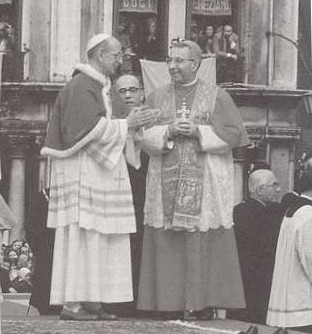
Pope Paul VI (l) with Cardinal Luciani (r)

One of the questions Allen asked Fr. Lorenzi was, prior to becoming pope, did Luciani express a positive view of contraception? Lorenzi answered in the affirmative. Then-Bishop Luciani's journal from the Council shows that he hoped the commission, appointed by John XXIII before his death, to study the matter of birth control, would recommend and the pope would accept and change Church teaching on this matter. "Another factor," according Allen, that fuelled Luciani's hope for a change on this matter "was the 'spiritual trauma' the issue was causing for married couples, for whom it represented a 'laceration of conscience.'"

While bishop of Vittorio Veneto, a suffragan diocese to Venice, he was asked by the Patriarch of Venice, Giovanni Cardinal Urbani, to write a report on contraception for the bishops of the Triveneto region of Italy. In this report he took a rather positive view of contraception. When Pope Paul VI, according Allen, "got wind of the thinking in the Triveneto and sent his personal theologian, Msgr. Carlo Colombo, to meet with the bishops. Sources say that during the closed-door session, Luciani argued that Colombo’s position was 'too abstract' and did not take account of the real-life struggles of couples."

In the spring of 1968, just before the Pope's promulgation of Humane Vitae, Luciani gave a series of presentations in parishes of his diocese. In one parish, he was asked about birth control. His response was audio recorded, and is as follows:

"For me, this is the most serious theological question that has ever been dealt with by the church," the bishop said. "In the age of Arius and Nestorius, the issue was the two natures of Christ, and these were serious questions, but they were understood only at the very top of the church, among theologians and bishops. The simple people understood nothing of these things and said, 'I adore Jesus Christ, the Lord who has redeemed me,’ and that was it, there was no danger. Here, on the other hand, it’s a question that no longer regards solely the leadership of the church, but the entire church, all the young families, the young Christian families. It is a truly central point that they are still studying."

A few months later, on 25 July 1968, Paul VI promulgated Humane Vitae, Luciani’s adherence was immediate and unwavering, as befit him as a bishop. Four days after the encyclical appeared, Bishop Luciani, Allen tells us, despite his presentations in the Spring, wrote to his diocese:

"I confess that I had hoped in my heart that the extremely grave difficulties could be overcome and that the response of the magisterium, which speaks with special charisms and in the name of the Lord, could have coincided, at least in part, with the hopes held by many spouses." But, Bishop Luciani wrote, the Pope had settled the matter and the only Christian response is assent. He continued, writing that the Pope "knows that he is about to cause bitterness for many; he knows that a different solution would probably have drawn greater human applause; but he’s put his trust in God, and in order to be faithful to His word, he re-proposes the constant teaching of the magisterium, in this most delicate matter, in all its purity."

Nonetheless, Allen clearly states, it is "virtually certain [Luciani] would not have reversed Paul VI’s teaching. The church does not lurch from position to position like that, and Luciani was no doctrinal radical."

Marriage and the Gift of Life: Some Diaconal Observations

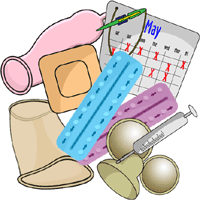
Today marks the end of the United States Conference of Catholic Bishops' annual Fall meeting. This meeting, unlike many others, had some rather significant outcomes. Apart from voting to dramatically restructure and streamline the Conference, a matter that is only interesting to bishops and Church geeks like me, the bishops issued several documents of note. Among these is Married Love and the Gift of Life. This document, while addressing marriage, the vocation to which most of the baptized are called, in toto, primarily speaks to the fact that somewhere around 96% of Catholic couples employ some method of artificial contraception (i.e., condoms, birth control pills, the patch, IUDs, etc.) to regulate the timing, number, and spacing of children. If one takes the time to look at the reasons why only around 4% of Catholic couples practice what the Church teaches, the main reason is a failure on the part of the bishops themselves. This particular pastoral problem is one that arises from what seminarians are taught, what deacons are taught, how catechists are formed, and what these ministers and teachers convey to the faithful, and the silence on the matter from the pulpit and in the religious education classroom. Even among self-described conservative Catholic couples rates of the artificial contraception, to include non-therapeutic sterilization, are high.

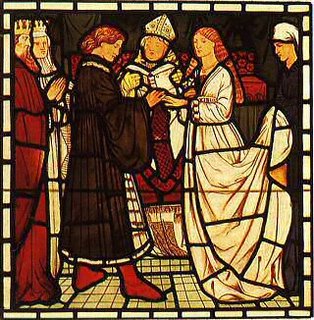
Therefore, it stands to reason that if the bishops, who voted to approve the document 220-11, with one abstention, are going to give this teaching the status it deserves, they must have programs and policies in place in their individual dioceses to put couples in a position to succeed in using NFP, not to mention convincing them it is the moral way to time, space, and limit the number of children they choose to have. After all, one does not have to reject the affirmative answer Catholic couples must give as part of their nuptial vows, when asked, "Will you accept children lovingly from God, and bring them up according to the law of Christ and his Church?" or the basic understanding of marriage as set forth in the Code of Canon Law, canon 1055 §1: "The matrimonial covenant, by which a man and a woman establish between themselves a partnership of the whole of life and which is ordered by its nature to the good of the spouses and the procreation and education of offspring, has been raised by Christ the Lord to the dignity of a sacrament between the baptized," to use artificial contraception. Further, one does not have to dissent from the moral norm that sexual activity is only morally permissible within marriage to use contraceptives.
Among artificial methods, there are different moral issues involved. With certain methods, like birth control pills, there are moral concerns over and above contraception. The pill often prevents pregnancy by acting as a chemical abortifacient, just like the RU 486 "morning after" pill. The abortifacient potential, along with the long term effect on the health of women should be reason enough for couples not to use this method. As far as condoms and other blocking methods are concerned, the issue becomes whether such genital contact is actually sexual intercourse, etc. These issues, while important to mention, are not the core of what I am advocating in this post.

As regards NFP we have a threefold task. The first task is communicating effectively why couples should use NFP, the moral attitude and intention that has to underlie any decision to use any method of NFP. The second task gets beyond the whys to the hows of practicing the various methods of NFP (i.e., Billings Ovulation, Creighton Model, Sympto-thermal) and calls upon bishops to dedicate the necessary resources to this important task. Thirdly, pastoral support for couples who choose to faithfully live the vocation to which God calls them, which means getting beyond the whys and hows, beyond the cheerleading and mechanics, to the reality and difficulties couples face in seeking to live in fidelity to God's law.

Natural Family Planning cannot be employed by couples as just another form of contraception. Properly speaking, NFP, when practiced with the correct intention, is not contraception. Moral acts have three components: the object chosen, either a true or apparent good; the intention of the subject who acts, that is, the purpose for which the subject performs the act; and the circumstances of the act, which include its consequences. If the intention behind using natural methods of family planning is the same as that behind the decision to use artificial contraception, the goodness of use NFP is forfeited. Of course, the object is also at issue as regards how couples seek to regulate the timing, number, and spacing of children.

Despite the overwhelming number of bishops who voted in favor of this document, the vast majority of dioceses only require couples preparing for marriage to take a 3 hour introduction to NFP class. This course basically tells couples that none of the current methods of NFP is the rhythm method, why Catholic couples are morally obligated not to use contraceptives, and, more objectively, why it is actually good for couples not to contracept. These courses do not instruct couples on how NFP is successfully practiced. In order to do that couples have to enroll in and take a full course of instruction with a certified NFP instructor. Bishop Olmsted in Phoenix, for one, has recently put a policy in place requiring all who want to be married in the Church in his diocese to take the full-course of NFP instruction. One of the practical challenges that arise from issuing this pastoral requirement is that most dioceses would not have enough instructors to teach all the couples.
As one charged with preparing couples for the sacrament of matrimony, I teach, encourage, and tell couples that the Church requires and expects them not to use artificial contraception and explain what is required of them. I have couples read Humane Vitae, discuss it with me and the other couples I am preparing at the time. I address criticisms the couples have in accepting this admittedly difficult teaching, of which Pope Paul VI writes in Humane Vitae, number 20, "The teaching of the Church regarding the proper regulation of birth is a promulgation of the law of God Himself. And yet there is no doubt that to many it will appear not merely difficult but even impossible to observe. Now it is true that like all good things which are outstanding for their nobility and for the benefits which they confer on men, so this law demands from individual men and women, from families and from human society, a resolute purpose and great endurance. Indeed it cannot be observed unless God comes to their help with the grace by which the goodwill of men is sustained and strengthened. But to those who consider this matter diligently it will indeed be evident that this endurance enhances man's dignity and confers benefits on human society."

The explicit need for God's grace to live chastely, even within marriage, can be a privileged way of teaching about God's love, God's mercy, and how we receive all that God yearns to give us, which is nothing less than His own divine life, in and through the sacraments. Pope Paul VI, again in Humane Vitae, number 25, writes directly to married couples "let them implore the help of God with unremitting prayer and, most of all, let them draw grace and charity from that unfailing fount which is the Eucharist. If, however, sin still exercises its hold over them, they are not to lose heart. Rather must they, humble and persevering, have recourse to the mercy of God, abundantly bestowed in the Sacrament of Penance."

The problem with not requiring couples to take the full course of instruction is that even couples who want to use NFP cannot do it from the get-go because they have not received instruction from a certified instructor far enough in advance. The number of such couples is not insignificant among the couples I have prepared. Pastorally, what do you tell them? Not to have intercourse on their honeymoon, or at all until they can start using NFP, which will be several months if they begin instruction right away? Simple answer: No, that is not the answer.
Relying on Amy Wellborn's paraphrase, Archbishop Naumann of Kansas City said, at the press conference during which Married Love and the Gift of Life was presented and discussed with the media, "that it was a priest's responsibility to catechize, say, a couple who was contracepting, present them with the truth, and if, after hearing that truth presented to them, they continued to contracept, no, they shouldn't receive Communion. The point of distinction being that the Church has the responsibility to present its own teaching, clearly and fully." I agree to some extent with what the Archbishop is saying, putting the burden in the first instance, on the pastor. However, before banning contracepting couples from communion, or even discussing such a serious ban, he and his brother bishops must insure that they have policies in place that assist couples under their care to faithfully practice what God requires and the Church teaches by committing resources to support their policies and requirements. Also, before taking aim at those under their pastoral care, individual bishops must insure their pastors, other priests, and deacons, as well as catechists and, in the case of marriage preparation, mentor couples, both live and teach the truth. Pastors must give support to couples in their care who seek to live in accordance with what the Church teaches, they must also exhort, encourage, and work with those who do not. In short, all the barriers that currently exist must be removed prior to any discussion of banning the contracepting couples from communion.

His Holiness, Pope Paul VI, in the final section of Humane Vitae writes: "Venerable brothers, beloved sons, all men of good will, great indeed is the work of education, of progress and of charity to which We now summon all of you."
Monday, November 13, 2006

As the Pope Prepares to visit his brother Patriarch

The Holy Father will be visting Turkey later this month. The Holy See has published the agenda for the Holy Father's Apostolic Visit to Turkey. As expected, he is not visting Trabezon where Fr. Andrea Santoro was murdered earlier this year. I look forward to the celebration of the Divine Liturgy at the Patriarchal Church of St. George on 30 November, the Feast St. Andrew, with the Eastern Orthodox Ecumenical Patriarch, Bartholomew I, presiding, at which the two Patriarchs will issue a joint declaration. To that end I offer a link to a very informative video on the Ecumenical Patriarch's website. In this video you can watch Bartholomew I retrieveing the relics of St. Gregory the Theologian and St. John Chrysostom from the Servant of God, His Holiness, Pope John Paul II, in Rome in November 2004, on the Feast of St. Andrew, the Apostle, patron of Constantinople in a ceremony. The relics of these two Patriarchs of Constantinople were seized by Western Christians in the sack of Constantinople during the Fourth Crusade in 1204 CE. There is a wonderful web resource for St. John Chyrsostom. In the video, it is Walter Cardinal Kasper, one of my favorite theologians, author of The God of Jesus Christ and President of Pontifical Council for Promoting Christian Unity who accompanies the Ecumenical Patriarch during the trip to Istanbul to return the relics.

On a much lighter note, We're tiny, we're toony, we're all a little looney

Sunday, November 12, 2006

Deacon Ancieto Armendariz

The story below was front page center in the Salt Lake Tribune today. Aniceto was a friend and brother. We were in formation together and during those four years, we did a lot of joking, a lot of praying, and grew pretty close. He was murdered last fall less than a week before I left the country. He is missed by his parish, by the many people he helped, by his brother deacons, to whom he was a leader and an example, but above all by his wonderful, strong, resilient and lovely wife Alma and his children.

The picture is of Aniceto on the day of our ordination by then-Bishop of Salt Lake City, now Archbishop of San Francisco, George Niederauer, 24 January 2003 in our lovely Madeleine , where I am still priviledged to serve . The other day I gave a rather negative assessment as to how well Catholic deacons, as whole, live up to our prophetic calling. While I do not revoke that assessment, Aniceto is an exception that proves the rule. Anyway, more than enough from me. Please read about a deacon who knew and lived the reality of the diakonia of Christ.

Deacon's murder can't derail couple's dream: Despite her husband's senseless death, Alma Armendariz continues their shared lifework of assisting immigrants

It would be remiss of me not to mention that the oldest member of the order of deacons of the Diocese Salt Lake City, Deacon Bud Wardle, passed into eternal life Saturday, 4 November. He was 90.

Saturday, November 11, 2006

St. Martin of Tours/Veteran's Day/My Birthday

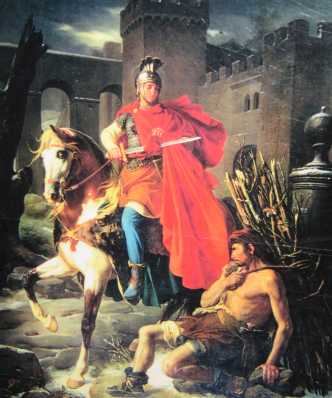
St. Martin of Tours was born in Pannonia of pagan parents around the year 316 AD. A soldier, he gave up military life after his conversion and baptism. Soon after his reception into the Church he founded a monastery at Ligugé in France where he led a monastic life under the direction of St. Hilary, who became bishop of Poitiers, and who was a potent opponent of Arianism in Western Europe. Martin was later ordained a priest and, later still, chosen as the bishop Tours, France. According to the Roman breviary, sitting in my lap, as bishop, St. Martin was "An example of the ideal good pastor, founding other monasteries, educating the clergy, and preaching the Gospel to the poor. He died in 397." In today's Office of Readings for the Memorial of St. Martin, a letter from Sulpicius Severus serves as the second reading. He writes, concerning the death of St. Martin, that after settling a dispute among the clergy of Candes in his diocese, as he was planning to return to his monastery in Tours, "suddenly he began to lose his strength. He summoned his brethren and told them he was dying. All who heard this were overcome with grief. In their sorrow they cried to him with one voice: 'Father, why are you deserting us? Who will care for us when you are gone? Savage wolves will attack your flock, and who will save us from their bite when our shepherd is struck down? We know you long to be with Christ, but your reward is certain and not be any less for being delayed. You will do better to show pity for us, rather than forsake us.'" Upon hearing these pleas, according Sulpicius Severus, Martin "broke into tears." He cried because "he was a man in whom the compassion of the Lord was continually revealed." Then, praying, St. Martin said: "Lord, if your people still need me, I am ready for the task, your will be done."

The reading for the Memorial of St. Martin is from the letter to the Hebrews, chapter thirteen, verses 7-8: "Remember your leaders who spoke the word of God to you; consider how their lives ended, and imitate their faith. Jesus Christ is the same yesterday, today,and forever"

The feast day of St. Martin, soldier, monk, bishop is a good day on which to celebrate Veteran's Day. A year ago I celebrated my birthday in Iraq. While there I was privileged to be able, during my time off, which was minimal, to serve, along with a wonderful priest, God's People as a deacon; serving at Mass, preaching, leading a prayer group, etc. The photo below is from Midnight Mass last year. On this occasion, among this group of warriors, there were many tears, as we who were bearing the burden of war prayed for Peace on earth, good will to men. Nonetheless, a mortar hit near us during Mass. We did not stop, or take cover, we continued to make Christ present in the fourfold way of the Mass (i.e., in the gathered faithful, in the person of the priest, in the reading of the Word, in the breaking of the bread) in that place that needed, and still needs, the Prince of Peace so badly. How is He to be present, except through His Body, the Church?

Therefore, let us remember my comrades in arms on this day and ask St. Martin of Tours, whose feast is today, along with St. Stephen, my baptismal and confirmation patron, one of the seven deacons chosen by the apostles in Acts, a martyr, to intercede for all serving the cause of peace in Iraq and Afghanistan. Let us ask them to intercede for their safety, to comfort their families, and for the insurgents' conversion of heart. Holy Mary, Mother of God, Queen of Peace, ora pro nobis. St. Stephen, ora pro nobis. St. Martin of Tours, on this, your feast day, ora pro nobis.

Another brief word on the name Stephen: it is my given middle name. So, when I became Catholic I had a ready-made baptismal and confirmation patron. He, along with St. Martin of Tours, are my heavenly patrons in a very special and powerful way. In fact, the holy card picture on my profile is of St. Stephen. I mention this only to remind people not to neglect their own patrons in the Communion of Saints. You neglect them to your own disadvantage. As Fr. Tonino Lasconi, a parish priest and author of numerous volumes on the renewal of catechesis in Italy, observes, "Without the saints, the faith vanishes."

As I was putting the finishing touches on this post I received a call from my Dad informing me that one of my uncles, a well-known Quarter Horse trainer, passed away this morning. He had been suffering from cancer, but in God's mysterious plan, he died from a sudden blot clot. I entrust him to God's mercy and also ask your prayers for the repose of his soul and the comfort of his family. So many people have left me this year. I think that it is why I found the story of St. Martin's death so comforting. It puts me in mind of the Holy Father's Easter proclamation: "Christus resurrexit quia Deus Caritas est!" Christ is resurrected because God is Love!

Friday, November 10, 2006

Evening Prayer, Friday, Week III

As Friday, liturgically, comes to an end, let us pause and pray.


Father,
in your loving plan
Christ your Son became the price of our salvation.
May we be united with him in his suffering
so that we may experience
the power of his resurrection
in the kingdom
where he lives and reigns with you and the Holy Spirit,
one God, forever and ever.
Amen.

Catholic Deacon Defined

With acknowledgement to Julie over at julieunplugged for the "How you will be defined in the dictionary link."

Catholic Deacon --
[noun]:

A level headed person who always makes the wrong decision


'How will you be defined in the dictionary?' at QuizGalaxy.com

Feast of Saint Matthew, Apostle and Evangelist

Readings: Ephesians 4:1-7.11-23; Psalm 19:2-5; Matthew 9:9-13 Today the Church celebrates the Feast of Saint Matthew, Apostle and Evangel...