Wednesday, December 6, 2006

Happy St. Nicholas Day!

This morning I was awakened by my six year-old daughter, who burst into my room, shoe in hand, to show me what St. Nicholas, whose feast is today, left her in it. The other big day for us during Advent is Santa Lucia (St. Lucy), on which the oldest daughter makes breakfast for everybody. Santa Lucia falls on 13 December.

This link will take you to a really great page St. Nicholas webpage. Nicholas was the bishop of Myra in Lycia, located in modern-day Turkey. He died in the middle of the fourth century (the 300s). His cult, at least since the tenth century, has been universal throughout the Church. On this, his day, let us ask him to intercede for us.

Sancte Nicolae- ora pro nobis


Father,
hear our prayers for mercy,
and by the help of St. Nicholas
keep us safe from all danger,
and guide us on the way to salvation.

Grant this through our Lord Jesus Christ, your Son,
who lives and reigns with you and the Holy Spirit,
one God, for ever and ever.

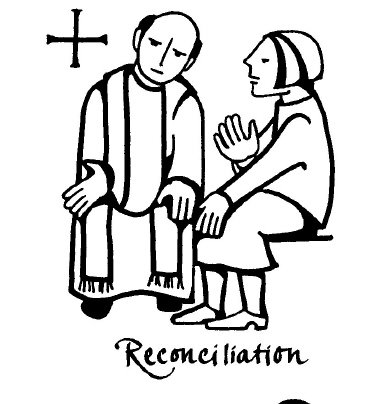
Being Reconciled as We Wait in Joyful Hope

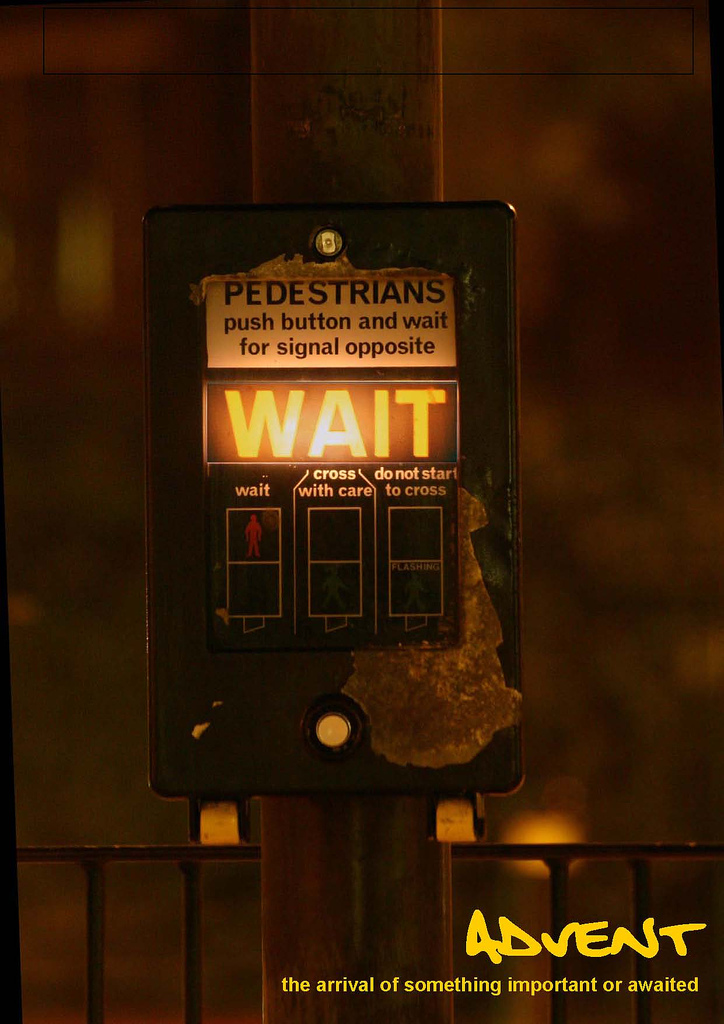
Advent is upon us. This Advent is the shortest possible Advent cycle, the minimum number of days between Advent's beginning and Christmas. So, hurry up and wait! Or, is that, our waiting is hurried? Shortening our waiting, in terms of Advent, means being ready to meet the Lord. As His disciples, our life is an advent. Our waiting for the Lord's coming, in words taken from the sacred liturgy, should be in "joyful hope". If you're anything like me, our waiting isn't always joyful of hopeful, but a bit fearful. This morning I am pulling from the Catholic Deacon archive a homily I gave for the Second Sunday of Advent in Iraq last year. What was unique about this Mass is that it was a rare occasion during which general absolution was offered by our pastor. This was canonically possible because we were in a combat zone. General absolution means being given the sacrament of penance without making a confession. It can only be extended in specific circumstances, like being at war. Besides, under the pastoral care of two priests and one part-time deacon were some 10,000 souls.


Readings: Isa 40,1-5. 9-11; Ps 85, 9-14; 2 Pt 3, 8-14; Mk 1,1-8

As human beings we cannot live without hope. Unlike other creatures, we are blessed with the ability to think about the future. We cannot live without something to look forward to. To be without hope is to surrender to despair and even death. We can find all sorts of things to live and hope for: for some measure of success or security, or for the realization of some more or less modest ambition; for our children, that they might be spared our mistakes and suffering and find a better life than we have known; for a better world, throwing ourselves into politics, medicine, or military service so that future generations might be better off. Indeed, these hopes are not selfish- they are noble. Such endeavors give a measure of dignity and purpose to our lives, but they are not the ultimate reason for which we exist.

In hoping for lasting peace, tranquil lives, sufficiency of food, an end to suffering, pain, and misery we are no different than people of all times and places. Just like the people of the Jewish scriptures, who awaited the advent of the Messiah, we live awaiting the Lord’s return- either at the end of time or at our death. Therefore, most of history is an advent, a waiting for the Lord. In this regard, we differ from our spiritual forbearers in two important ways. The first way we differ is by our recognition that Jesus’ entry into history at the time of the Incarnation is a partial fulfillment of God’s promises, an event that immeasurably confirms and strengthens our hope. The second way we differ is that Jesus Christ has revealed to us that God is not far off, but is already in our midst, in no way more powerfully than in the Eucharist we are celebrating. This is why Mary and John the Baptist are so important in the Advent liturgy- they recognized the new situation brought about by Jesus and serve as models for the Church in both discerning and being the presence of our Christ in and for the world.

Taking our cue from Isaiah in today’s first reading, God speaks tenderly to us, citizens of the new Jerusalem (Isa 40,2). God bids us to acknowledge our sins and to renounce all that separates us from him and from each other. In a word, we are called to be reconciled. We already know that through the life, death, and resurrection of Jesus Christ, our guilt is expiated, but the effect our sins have on our lives and on our relationships continue to plague us. To reconcile means, in the first instance, to restore friendship or harmony. It also means to make consistent or congruous, to be made whole. We must, therefore, open ourselves to the reconciliation God offers us in Christ Jesus in order to prepare ourselves to receive Christ anew.

St. Peter in today’s second reading calls us to consider what sort of a person each of us should be, or, should at least aspire to be. Hopefully, it is this sort of reflection we have been doing this week in preparation for receiving General Absolution. Rather than being let off easily with what might easily be dismissed as "cheap grace", receiving general absolution calls us to an even deeper self-reflection because we don’t have the aid of a confessor to rely upon and assist us. As members of the military services we are all believers in accountability and taking responsibility, as we should be. This professional virtue is one that enhances us as Christians, as members of the Church, which is Christ’s Body. We hold ourselves and others accountable and take responsibility, not primarily to assess blame or to punish, but to correct and improve ourselves and our team as we strive to accomplish our mission and realize our goals.

What St. Peter gives us is a fairly thorough examination of conscience. Reading this passage reminded me of the old saying: "Live so the priest won’t have to lie about you when you die." Funny? Yes. But like much humor, it calls our attention below the surface of our lives. It calls us to a deeper reflection on those areas and patterns of behavior that are the source of our alienation from God and from each other.

Most of us, when we take the time to think seriously about how we live quickly discern that, on the whole, we are pretty nice people. If we look deeper, however, we also see that we fall short of God's standards, which are unreachable on our own (Rom 3,23). There is no better recognition of this than when we acknowledge at each Mass, just before receiving communion: "Lord, I am not worthy to receive you, but only say the word and I shall be healed." God does not merely speak a word to us, but gives himself to us entirely in Jesus Christ, his Word. The words of the Baptizer announcing the Lord’s coming are summed up nicely in the lyrics of a contemporary Christian song: "He spoke the Incarnation and so was born the Son/His final word was Jesus/He needs no other one/He spoke flesh and blood so he could bleed and make a way divine/ and so was born the baby who would die to make it mine" (Michael Card, The Final Word). Therefore, we should all be very grateful that "[God] is patient" with us and gives us the time to come to repentance (2 Pet 3,9).
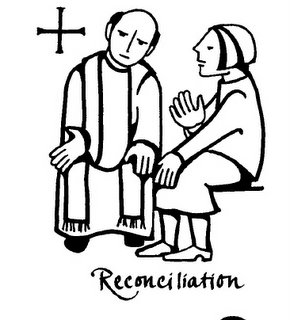

As we receive absolution, which requires that we "firmly intend, with [God’s] help, to sin no more and avoid whatever leads [us] to sin," let us be mindful of those things we need to change, resolve to change them, and humbly acknowledge that we need God’s gracious help, as we did in our Psalm response: "Lord, let us see your kindness, and grant us your salvation" (Ps 85,8). We also require the help of our sisters and brothers to keep our resolutions.

Each of us has been baptized, not just with water, but with the Holy Spirit, who is Jesus’ way of being present with us and who effects the sacraments. In baptism our sins are washed away. The sacrament of reconciliation, as an extension of baptism, is where God renews us when we have failed to live up to the promises we made at our baptism.

So, my sisters and brothers, as we prepare to see God’s kindness and receive God’s salvation let us humbly acknowledge, "Father, we need your help, Free us from sin and bring us to life. Support us by your power," Amen (From Evening Prayer for Thursday the First Week of Advent).

Monday, December 4, 2006

A summary

In seeking to wrap-up the whole Regensburg Lecture/Apostolic trip to Turkey continuum, I offer a summary of what has gone down as far as our Holy Father's approach to Islam, that also also touches on other religions. So, with a little assistance from John Allen, I have to say that the real target of Pope Benedict XVI is not Islam; it is relativism. In common with Christians, both Jews and Muslims believe in a public morality and in the truth. This is not to be religiously indifferent in the least because it is undeniably true that the three monotheistic faiths make truth claims that contradict each other and that what makes Christianity unique is Jesus Christ. On these no quarter will be given, nor need it be. Nonetheless, Pope Benedict sees relativism and secularism as bigger issues presently than the differences between religious believers- this also holds true for Eastern religions. This is one reason why Pope Benedict has endorsed Fr. Hans Küng's Declaration of the Religions for a Global Ethic and the work of Küng's Global Ethic Foundation. It is the view of the Holy Father that all people of faith can and, indeed, must make common cause against secularism and its resultant relativism. The true clash of civilizations, then, is not between Islam and the West, "but between belief and unbelief".

These insights, I believe, are spot-on. What many Muslims resist most is not Christianity per se- though aggressive proselytism would not go over well- but unreconstructed Western enlightenment values, which lead secularism, that, in turn, results in relativism, which leads to decadence. It also leads to the fraying of families, the core of all societies. When people in non-Western cultures speak of family, it is not merely the nuclear family, it is a broad extended family. As for Christianity in the West the Holy Father sees the need for the Church to bridge-the-gap between, on the one side, human life, sexual morality and, on the other, the environment, peace, and social justice. Again, this where a global ethic, rooted in faith, can be very important. He also wants to challenge Islamic countries to allow freedom for Christians to worship, to build churches, to own property, to organize, etc.

Sunday, December 3, 2006

Advent- The Year of Grace 2007

"In Advent the liturgy repeats to us often and assures us, so to conquer our natural distrust, that God 'comes': he comes to be among us, in each of our situations; he comes to live in our midst, to live with us and in us; he comes to overwhelm the distances that divide us and separate us; he comes to reconcile ourselves with Him and with each other. He comes in the history of humanity, to knock on the door of each man and of each woman of good will, to bring to individuals, to families and to peoples the gift of fraternity, of concord and of peace. For this, Advent is par excellence the time of hope, in which believers in Christ are invited to remain in a watchful and industrious vigil, fed by prayer and the active pledge of love. May the coming Birth of Christ replenish the hearts of all Christians with joy, with serenity and with peace!"To live this period of Advent in the most authentic and fruitful way, the liturgy exhorts us to look to Mary Most Holy, and ideally to place ourselves together with her on the path to the Grotto of Bethlehem. When God knocked on the door of her young life, she welcomed him with faith and love. In the coming days we will contemplate her in the luminous mystery of her Immaculate Conception. Finding ourselves attracted by her beauty, reflective of the divine glory, may 'the God who comes' find in each one of us a good and open heart that he may overwhelm with his gifts."

His Holiness, Pope Benedict XVI, 2 December 2006, First Advent Vespers.


The photograph and card are creations of Ben Bell.

Friday, December 1, 2006

Deo Gratias

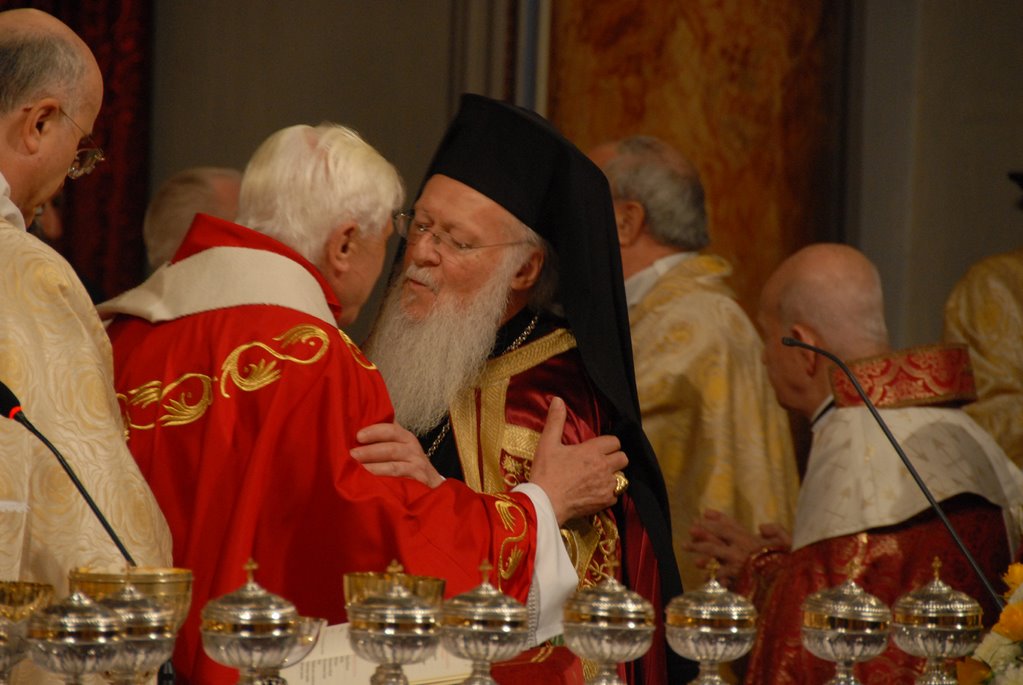
The nice thing about being an amateur is that you can always fall back on the professionals. I was going to write a summary of Pope Benedict XVI's Apostolic visit to Turkey, but then I read Fr. Richard John Neuhaus' summary of the trip, its ecumenical implications and its implications for relations with Islam. He also discusses how the visit of Rowan Williams, Archbishop of Canterbury, to Rome earlier in November ties in with all these goings on. Therefore, I encourage you to follow the link to First Things' On the Square blog. Fr. Neuhaus provides further links to stories of interest. I am always keen to read George Weigel. While I frequently disagree with Weigel, he is an insightful and intelligent commentator who always gives one much to ponder and provides a perspective worth considering.

Also worth reading is Pope Benedict's homily in Ephesus at his Mass Before the Shrine of Meryem Ana Evì. Unlike masses during other Apostolic Visits, like his visit to Germany in September, at which hundreds of thousands and even millions attend Papal masses, this mass was small, with perhaps 300 people in attendance. Our Holy Father's words were so compassionate and comforting to an embattled Christian community.

"Another of my Predecessors was in this country not as Pope, but as the Papal Representative, from January 1935 to December 1944, Blessed John XXIII, Angelo Roncalli, whose memory still enkindles great devotion and affection. He very much esteemed and admired the Turkish people. Here I would like to quote an entry in his Journal of a Soul: 'I love the Turks; I appreciate the natural qualities of these people who have their own place reserved in the march of civilization' (pp. 233-4). He also left to the Church and the world the legacy of his Christian optimism, rooted in deep faith and constant union with God. In that same spirit, I turn to this nation and, in a special way, to the 'little flock' of Christ living in its midst, in order to offer a word of encouragement and to manifest the affection of the whole Church. With great love I greet all of you here present, the faithful of Izmir, Mersin, Iskenderun and Antakya, and others from different parts of the world, as well as those who could not take part in this celebration but are spiritually united with us."

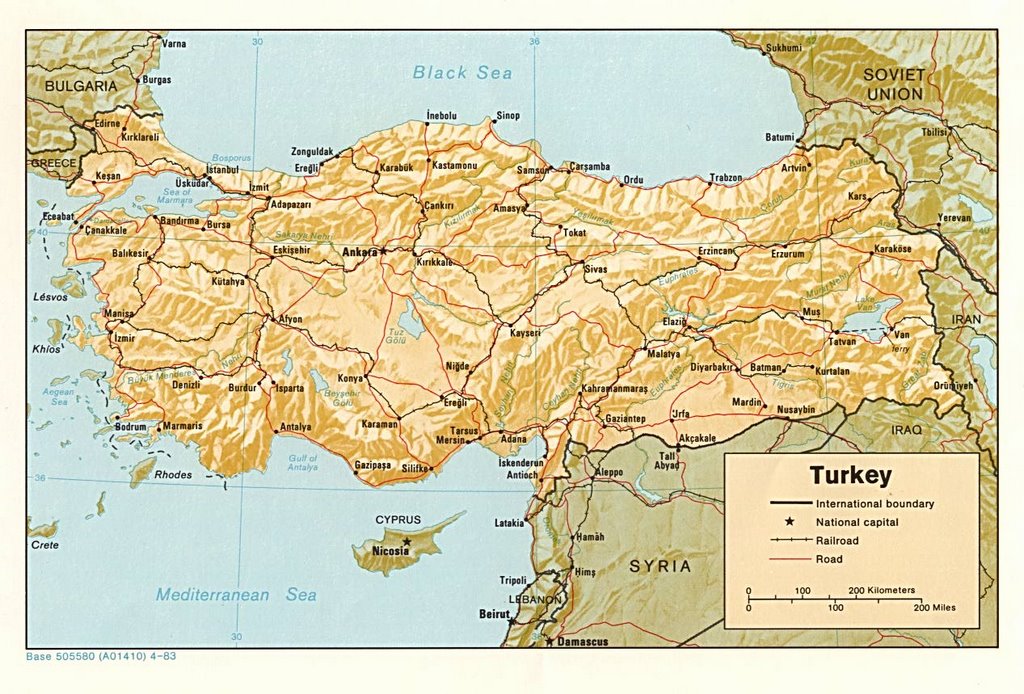
I can tell you that I know many of this "little flock," not the least of which are the Catholics at St. George's parish at Trabezon, Fr. Santoro's little flock, as well as the small community at Antakya (i.e., Antioch- if you click on the map to the left it enlarges to readable size), where St. Peter was the first bishop and where Jesus' disciples were first called Christians (Acts 11,26), quite a few of whom travelled to Ephesus, are so heartened by the Holy Father's visit and the promise of his constant prayers. I almost cry with joy when I think of how much his visit, despite all the predicable media illiteracy about both its purpose and its fruits, means to the Church in Anatolia.

Of course, as per usual, Rocco over at Whispers leads the charge by providing an English translation of the Pope's homily at Holy Spirit Cathedral in Istanbul, a part of which is below:

"Gathered this morning in this house of prayer consecrated to the Lord, how can we not evoke the other fine image that Saint Paul uses in speaking of the Church, the image of the building whose stones are closely fitted together to form a single structure, and whose cornerstone, on which everything else rests, is Christ? He is the source of the new life given us by the Father in the Holy Spirit. The Gospel of Saint John has just proclaimed it: 'out of his heart shall flow rivers of living water'. This gushing water, this living water which Jesus promised to the Samaritan woman, was seen by the prophets Zechariah and Ezechiel issuing forth from the side of the Temple, so that it could make fruitful the waters of the Dead Sea: a marvellous image of the promise of life that God has always made to his people and that Jesus came to fulfill. In a world where men are so loath to share the earth’s goods and there is a dramatic shortage of water, this good so precious for the life of the body, the Church discovers that she possesses an even greater treasure. As the Body of Christ, she has been charged to proclaim his Gospel to the ends of the earth (cf. Mt 28:19), transmitting to the men and women of our time the Good News which not only illuminates but overturns their lives, even to the point of conquering death itself.

As this Friday comes to a close, let us give thanks to God for all we have been given, for this day on which recall the great love shown us by God in the sacrifice of His Son, our Lord, Jesus Christ on the Cross. We give thanks for the success of the Holy Father's Apostolic journey to the Republic of Turkey, by recalling the closing verse of the hymn:


"All praise and thanks to God, the Father now be given/The Son and Spirit blest, who reigns in Highest Heaven/Eternal Triune God, whom earth and heaven adore/For thus it was is now and shall be evermore."

Friday: A Shepherd Calls His Flock to Repentance on the Threshold of Advent

Back in October, at the prompting of evangelical pastor, Mark Driscoll, I posted Yet More Signs of Hope, God's fierce love and endless mercy, Jesus Christ. Acting as a true pastor of souls, Bishop Paul S. Loverde, of Arlington, Virginia, has issued a pastoral letter on the evil that is pornography, the availability and use of which is far too widespread, entitled Bought With a Price: Pornography and the Attack on the Living Temple of God.


His Excellency begins his letter to his flock by writing, "In my forty years as a priest, I have seen the evil of pornography spread like a plague throughout our culture. What was once the shameful and occasional vice of the few has become the mainstream entertainment for the many- through the Internet, cable, satellite and broadcast television, cell phones and even portable gaming and entertainment devices designed for children and teenagers". Bishop Loverde calls pornography a "plague" that "stalks the souls of men, women and children". Furthermore, this plague currently afflicting our society, "ravages the bonds of marriage and victimizes the most innocent among us". Indeed, pornography damages our humanity, it prevents people from seeing each other as beautiful, unique expressions of God's loving creativity.

Assuming most readers will not read the Bishop's entire letter, here is the take away, what we, as professed disciples of Jesus Christ, need to hear and heed: "I remind all the faithful, therefore, that the use of pornography - i.e. its manufacture, distribution, sale or viewing - is gravely sinful. Those who engage in such activity with full knowledge and complete consent commit a mortal sin. Such actions deprive them of sanctifying grace, destroys the life of Christ in their souls, and prevents them from receiving Holy Communion until they have received absolution through the Sacrament of Penance".

Now, lest you be guilty of any of the sins mentioned by Bishop Loverde, do not despair. Repent! Trust in God's mercy and deep, deep desire, expressed in the sacrificial death of His Son, Jesus Christ, to reconcile you to Himself. Admit your sinfulness, first to yourself, then to Christ, in whose person the priest acts in the Sacrament of Penance. We stand on the threshold of Advent, a season of renewal, during which the Sacrament of Penance is made more available. It is the Church's New Year. If, even after confessing and resolving, in your act of contrition, "to sin no more and avoid whatever leads me to sin", you feel a gravitational pull toward pornography, admit your addiction, again, to yourself, find a spiritual director, who you trust, with whom you can be honest, and to whom you can be accountable. Then, seek support in a group of people who suffer from the same disorder. St. Paul tells us that "God is faithful and will not let you be tried beyond your strength; but with the trial he will also provide a way out, so that you may be able to bear it." (1 Cor 10,13)

If you find yourself still rationalizing recreational use of porn, read this document and be disabused of your excuses. At baptism we are called to walk always as children of the light, let us heed this call and purify our hearts, our marriages, our families, our communities, our nation, and, indeed, the whole world. In a pastoral letter written in the first century, St. Peter warns Christians in a similar vein: "Be sober and vigilant. Your opponent the devil is prowling around like a roaring lion looking for (someone) to devour" (1 Pet 5,8). Worse than being devoured by the devil, is being a lion in the service of the devil devouring those exploited in the making of pornography!

Friday: Communion & Liberation on the Threshold of Advent

"It is hard work," writes Fr. Tom Ryan, "to liberate oneself from inner compulsions and commit oneself to the service of others or anything that transcends our own personal benefit and serves a wider world". Of course, one key is that we do not and cannot liberate ourselves, we need Jesus Christ to sanctify us, we need His Body, that not only is a sacrament, but makes us- together- the sacrament of salvation for the world. There is a delicate and changing balance we must strike between passively and patiently relying on Christ, who, through the Holy Spirit, especially in and through the sacraments, works to change us and our cooperation with what God is doing in us, so that God can work through us. St. Paul, in his letter to the Phillipians, achieves a balance between these two when he writes:

"So then, my beloved . . . work out your salvation with fear and trembling. For God is the one who, for his good purpose, works in you both to desire and to work. Do everything without grumbling or questioning, that you may be blameless and innocent, children of God without blemish in the midst of a crooked and perverse generation, among whom you shine like lights in the world, as you hold on to the word of life, so that my boast for the day of Christ may be that I did not run in vain or labor in vain" (Phil 2,12-16).

There is also a quote, taken from Fr. Ryan's book, Four Steps To Spiritual Freedom, from Jean Vanier, founder of the l'Arche communities, for the mentally disabled that is worth pondering.

"For most people, like myself, [spriritual freedom] is something for which we have to work and struggle. It is a long but beautiful road. Some people seem to have fewer barriers, fewer defense mechanisms; their compulsions seem to be weaker. I have met wonderful mothers who seem whole and integrated. I have met wise and gentle men and women who are open and free. I have met people with disabilities who have an astounding freedom; they do not seem to be imprisoned in prejudice. I have met people with mental illness who are free in their hearts; they know they are ill, but they have understood and accepted their limits. I have met many people in slum areas and in broken situations all over the world who seem wonderfully free, uncluttered by the need for power and human glory . . . This freedom is for all. Some are closer to it. Others among us have to work harder for it, because we have stronger defenses to overcome" (Ryan, pg.15).

Our penitential practices are not ends in themselves, they are but means that enable us to love better, which requires us to repent. Repentance means so much more than just being sorry, it is a commitment to change, to open ourselves by letting go, to surrender to God, to God's mercy and love. My dear friends, this is no easy task; it hurts because we try to hold on to that which God calls us to let go, we fight God for what we don't really want, rather than take what God gives that we need. This is the process of opening ourselves to what God wants to accomplish in us and, then, through us. At the end of the day, achieving the freedom God intends us to have and that we desperately and, oftentimes, impatiently want, "is not the work of a month or a year", it is the work of a lifetime, it is a pilgrimage, and, as Michael Card sings, there is a joy in the journey. Above all, it is a journey we walk together, encouraging each other, holding each other up when we are weak, sharing our experiences by serving each other. Liberation in Christ is not primarily freedom from, it is freedom for and to love.

"There is a joy in the journey/
There's a light we can love on the way/
There is a wonder and wildness to life/
And freedom for those who obey

"And all those who seek it shall find it/
A pardon for all who believe/
Hope for the hopeless and sight for the blind

"To all who've been born in the Spirit/
And who share incarnation with Him/
Who belong to eternity stranded in time/
And weary of struggling with sin

"Forget not the hope that's before you/
And never stop counting the cost/
Remember the hopelessness when you were lost

"There is a joy in the journey/
There's a light we can love on the way/
There is a wonder and wildness to life/
And freedom for those who obey

And freedom for those who obey..."

Tragedy challenges God's love

No sooner did I finish my reflection on this week's second reading from Romans chapter 8 about the all-encompassing nature of God's...