Wednesday, September 6, 2006

W before the turn

This is a more fully fleshed out version of an earlier post on early W. Again I hear echoes of Scott Dodge for nobody, but it is great to re-engage.

Below are the 7 basic propositions on which Ludwig Wittgenstein's earliest work, known in English as the Tractatus Logico-Philosophicus, which he submitted as a dissertation at Cambridge University and on the basis of which he was awarded his doctorate, is based. The Latin title was suggested by G.E. Moore as the title for its publication in English. Moore was a friend of W's and a Cambridge University Philosophy professor. In naming the work Moore had in mind Baruch Spinoza's Tractatus Theologico Politicus.

The entire work is organized on the basis of these 7 propositions. Each proposition or sentence is numbered according to this system: 1; 1.1; 1.2; 1.2.3; 1.2.3.4- 2.1; 2.1.5, etc., all the way through to seven. Proposition 7 is unique in that it has no supporting propositions.

After being awarded his doctorate from Cambridge, W returned to his native Austria and trained to be an elementary school teacher. He taught school in lower Austria for several years. His turn began after the publication of the Tractatus and toward the end of his teaching career, during which we worked to develop, among other things, methods to teach kindergartners algebra. The structure, simplicity, and elegance of the Tractatus are obvious. Therein, as the saying goes, lies the rub. Is the world really reducible in that way? W came to see it was not.

Among the external factors in his turn, which resulted in his return to Cambridge and Philosophy, were the visits of F.P. Ramsey (brother of Michael Ramsey, who was Archbishop of Canterbury from 1961-1974). Ramsey was a genius who died at 26 and was a fellow of King's College Cambridge, who traveled to Austria to meet with W and discuss the Tractatus with him. A second identifiable external factor were his discussions and involvement with members of the Vienna Circle, a group of so-called logical positivists, chief among whom was Rudolf Carnap. Of particular note in these latter discussions was the verifiability principle, based on 4.024 of the Tractatus. Stated simply, W detected an inherent contradiction in this derived principle. Namely, what verified the principle of verifiability?

In any case, he ultimately returned to Cambridge and continued teaching Philosophy. Eventually he assumed the chair of Philosophy held by G.E. Moore upon Moore's retirement. While W's later phase began during the time between the publication of the Tractatus and his return to Cambridge, he continued wrestling with the fundamental issues engaged by these 7 propositions for the rest of his life, even rejecting proposition 2 , regarding atomic facts. In his later work he focused on the relationship between language and logic, a departure from his work leading up to and culminating with the Tractatus, which, taking its lead from Frege and Russell, explored the relationship of logic to mathematics.

The Seven Fundamental Propositions of the Tractatus

1. The world is everything that is the case.

2. What is the case, the fact, is the existence of atomic facts.

3. A logical picture of facts is a thought.

My comment: Thought and picturing (i.e., seeing) remains problematic for W.

4. A thought is a proposition with sense.

My comment: This smacks of Russelian empiricism. Russellian for Bertrand Russell , W's tutor at Cambridge and sometime mentor, with whom he had a complete falling out. Russell, along with Alfred North Whitehead, did some great work (i.e., Principia Mathematica) in the 1910s, but, unlike W who remained engaged in the rough-and-tumble of Philosophy until the end of his life, really faded as a serious thinker. But then Russell died in 1970 at age 97. Whereas, W died at age 62 (three days after his 62nd birthday) in 1951.

5. Propositions are truth-functions of elementary propositions. An elementary proposition is a truth function of itself.

My comment: An elementary proposition would be John has brown hair. The truth function of this elementary proposition consists solely in whether John actually has brown hair. Either he does or he does not (how one might verify if John has brown hair {i.e., looking at John to see if his hair is brown} introduces the problem of verifiability). Therefore, this elementary proposition is simply either true or false. In this way it is a truth function of itself.

6. The general form of a proposition is the general form of a truth-function.

My comment: An example of a general proposition, which is made up elementary propositions, is John has brown hair and blue eyes. This is a truth functional proposition. Let's call the proposition John has brown hair a and call the proposition John has blue eyes b. So, the conjunctive proposition a&b is truth functional because it is true just if a and b are true and it is false if either a or b is false. It is also false if both a and b are false. One can also detect a bit of the challenge presented to logic by language. John may have blue eyes, but have blonde hair. Nonetheless, logically, the initial general propositions a&b remains false. Disjunctions (i.e., Either John is a male or he is a female) are also truth functional. In this W is following the work of mathematician Gottlieb Frege, one of the founders of modern logic, who assigned truth values to propositions and derived truth functionality from these values in his explorations on the relationship between mathematics and logic. W's early concern was the same, but after his turn he began to focus, building on his early work as embodied in the Tractatus , on the relationship between logic and language and language and the world, which he came to see as being far more complex than these 7 propositions.

7. What we cannot speak about we must pass over in silence.

My comment: This statement, ends the Tractatus and is not elaborated on further.

Year II 22nd Tuesday of Ordinary Time


This week and next I am conducting daily communion services at Holy Family Parish in South Ogden. This presents a rare opportunity for me, as a deacon, to preach the weekly lectionary. What follows is my homily for Tuesday, 5 September, fortified with useful links.

Readings: 1 Cor 2,10b-16; Ps 145, 8-14; Lk 4,31-37

Our first reading today, from St. Paul’s first letter to the Corinthians, seems a bit esoteric. Any attempt to describe in mere words matters of the spirit is bound to come across as a bit confusing and fall short of the reality of the experience. In this passage, Paul uses the analogy of how difficult, if not impossible, it is to know what is going through somebody else’s mind. We all know that that person alone is privy to his/her innermost thoughts and feelings. Sure, we have language to tell others what is on our mind. Our outward disposition, our body language, if you will, also indicates, at least to some extent, what we are thinking or feeling in a given situation. But we can also go to great lengths to conceal our inward disposition.

St. Paul uses this analogy to demonstrate that "no one knows what pertains to God except of the Spirit of God" (1 Cor 2,11). He mentions this not to demonstrate that what pertains to the Spirit of God is inaccessible, or unavailable to us. On the contrary! For in the very next sentence the apostle writes: "We have not received the spirit of the world but the Spirit who is from God." Paul’s point is that we have received God’s Spirit for an express purpose; "so that we may understand the things freely given us by God" (1 Cor 2,12). Now what is given us freely by God is salvation by and through His Son, our Lord, Jesus Christ. As a result of this gift of grace, we have been anointed by the Holy Spirit so the you and I, by faith and in virtue of our baptism and being sealed with the Holy Spirit in confirmation, "have the mind of Christ" (1 Cor 2, 16).

One of the results of having the mind of Christ is being attentive to spiritual realities. It is easy to dismiss passages of Scripture, such as our Gospel today, in which Jesus casts out a demon, as having nothing to do with us and our advanced technological age. It remains true that the best trick Satan has up his sleeve is to convince us that he doesn't exist. So, while we may never experience anything as dramatic as this morning’s Gospel passage, we do experience the influence of the Evil One. Like a good policeman, our Adversary applies no more force than is necessary to accomplish his purpose, which is always to separate us from God and from each other. We experience this influence when we are hampered, like St. Paul (Rom 7,15) from doing the things, not only that we know we should do, but that we want to do. This influence is subtle and is manifested when doing the good we want to do and know we should do becomes hard. When little things, like praying each day, not being angry with or resentful of others, not nursing grudges, reaching out to those who need our help, etc., become like climbing Mt. Everest. In other words, when following Jesus seems inordinately difficult, like being afflicted with spiritual chronic fatigue syndrome, we can be certain that the enemy is at work.

We should not fear, however, because in the Holy Spirit, we have the same power to overcome evil as our Lord in today’s Gospel. Indeed, we “have the [very] mind of Christ!” This power of God unto salvation is a gift that we receive by faith. But, to borrow the words of Christian teacher Dallas Willard, “salvation is a life.” Therefore, to have recourse to the Holy Spirit in our hour of need, we must constantly strive to live in such a way that we know the mind of God. This means nothing more than knowing how God works in each of our lives individually. God relates to us all in a different way because, as our loving Father, He knows each one of us intimately. God knows us better than we know ourselves.

A disciple observes the disciplines of her/his Master. If we are to be disciples of Jesus, it stands to reason that in order to know the mind of God we must communicate with Him. We must pray, contemplate and meditate on God’s word given us in Scripture. If we truly believe the Scriptures are God’s revelation to us, we must know Scripture. The ancient practice of lectio divina can be a useful tool in each of our lives. One way to practice divine reading is by looking at the readings for each day’s Mass. Then, following this tried and true method of listening to and hearing God’s word for our own life, we go forth each day with a word from God we know is true. Lectio divina involves four steps:

1) The first stage is lectio (reading) where we read the Word of God, slowly and reflectively so that it sinks into us. Any passage of Scripture can be used for this way of prayer but the passage should not be too long. Lectio is very different from the speed reading which modern Christians apply to newspapers, books and even to the Bible. Lectio is reverential listening; listening both in a spirit of silence and of awe. We are listening for the still, small voice of God that will speak to us personally - not loudly, but intimately. In lectio we read slowly, attentively, gently listening to hear a word or phrase that is God's word for us this day.
2) The second stage is meditatio (reflection) where we think about the text we have chosen and ruminate upon it so that we take from it what God wants to give us. We might repeat it out loud or in our mind over and over, until we know it and begin to think about what is God saying to me in this word, in these words?
3) The third stage is oratio (response) where we leave our thinking aside and simply let our hearts speak to God. This response is inspired by our reflection on the Word of God.
4) The final stage of Lectio Divina is contemplatio (rest) where we let go not only of our own ideas, plans and meditations but also of our holy words and thoughts. We simply rest in the Word of God. We listen at the deepest level of our being to God who speaks within us with a still small voice. As we listen, we are gradually transformed from within. Obviously this transformation will have a profound effect on the way we actually live and the way we live is the test of the authenticity of our prayer. We must take what we read in the Word of God into our daily lives.

Prayer, as we see from lectio divina, includes at least as much, often more, listening as talking. It is absolutely essential to having the “mind of Christ.”

Sunday, September 3, 2006

"The glory of God is man fully alive"- St. Irenaeus

"Dance Like a Monkey

In the spirit of Dr. Samuel Johnson who, after kicking a stone and stubbing his toe, said of Bishop George Berkeley's idealism, which can be summed up as "to be is to be perceived", "I refute him thus", I offer to Ann Coulter and her following, a new song from the once infamous, but now tame, New York Dolls, "Dance Like a Monkey."

Friday, September 1, 2006

Disciplines of Jesus' Disciples: The Fruits of Fasting


Fasting, as Richard Foster observed over 25 years ago in his Celebration of Discipline: The Path to Spiritual Growth, is much neglected among Christians. While things have improved somewhat over the intervening years, due in no small part to Foster's efforts and those of his associate, Dallas Willard, it is fair to say not many Christians regularly fast. This is a detriment to us both individually and collectively. Writing directly from my own experience, which I try to avoid most of the time, fasting brings a clarity and focus that comes to me in no other way. It is a discipline in which I allow my spirit and flesh to intersect. Among other things, fasting detoxifies us of all we tend to put in our system, it takes off that edge we often feel. It aids in prayer because, while fasting, whenever I feel hungry (and I do), I pray and ask God to teach me the truth expounded by Jesus during his 40 day fast; we do not "live by bread alone, but every word that comes from the mouth of God (Matt 4,4). Of course, the Word, the final Word is Jesus Christ himself.

Fasting, through its physical effects combined with prayer, helps to me slow down and focus more clearly on relationships. It shows me how often I react instead of acting with intention. It aids me in examining my conscience because, at the end of the day, being a bit hungry and tired, I don't have the energy to deal with my usual excuses and internal machinations. Being more honest with myself enables me to be more honest with God, which, in turn, enables me to be more genuinely myself- the person God, our Father, made me, wants me, and graciously helps me to be.

In the Eucharist, our Lord becomes for us "the Bread of life." The words taught by the Word tell us this clearly: "I am the living bread that came down from heaven. Whoever eats of this bread will live forever; and the bread that I will give for the life of the world is my flesh" (6,51). Just this past Sunday, the twenty-first of Ordinary Time in this year of grace, we ended a three week recitation of John chapter six, known as the "Bread of life" discourse. By fasting, not only do we, as disciples imitate our Master, we take Jesus at his word that he doesn't merely have the bread of life to offer us, but that He himself is the Bread of life.

If all this reads like so much pseudo-spiritual clap-trap, I offer you a friendly and non-competitive challenge. I challenge you to try fasting. Don't do it all at once. Eat nothing and drink nothing, except water, for 12 hours (i.e., skip a meal). During this time, whenever you want something to eat or something to drink besides water, pray spontaneously, using your own words, or a formal prayer (i.e., Pater Noster, Gloria Patri, Anima Christi, Actus spei, Actus caritatis, etc.). Pray at the beginning of your fast and have an intention or intentions (i.e., something or someone you want to lift up to God). Then, after doing that once or twice a week for a week or two, fast for 24 hours (i.e., skip two meals). If at all possible end your fast by either going to confession (your intention could be to make a good confession, which requires a thorough examination of conscience) or by going to Mass, or go to confession and then Mass. I can think of no better way to break my fast than by eating the Bread of life and drinking the "true drink" from the cup of salvation.

Thursday, August 31, 2006

Leave the (Left Behind) Nonsense Behind

Michangelo's Final Judgment

His Holiness, Pope Benedict XVI, continued last week his catechesis for the Wednesday General Audience on the apostles. It was his third catechesis devoted to the apostle John. In his third Johannine catechesis, the Holy Father focused the Book of Revelation or, in its Greek-inspired name- αποκαλυψις, or, transliterated apokalypsis. Meaning, literally, the lifting of the veil. It has come to define a genre in Biblical literature having to do with eschatology (eschaton meaning last). Hence, it has come to be used to describe something like, as Benedict puts it in his teaching, "the idea of an impending catastrophe" .

The success in recent years of the abysmal Left Behind series of books makes it all the more important to look at this book, which has been the cause of so much weirdness among Christians. The effect of Left Behind on popular Christian religious imagination reminds me of a passage from Marilynn Robinson's wonderful novel Gilead in which the main charcter, a Congregational minister named John Ames, says that he blames television and radio preachers "for sowing a good deal of confusion where theology is concerned." He laments that one "can spend forty years teaching people to be awake to the fact of mystery and then some fellow[s] with no more theological sense than a jackrabbitt," in the present case, writes himself a series of books "and all your work is forgotten."

In this Revelation/Apocalypse/Unveiling the objective, according to il Santo Padre, is "to unveil, from the death and resurrection of Christ, the meaning of human history." But to read the book with understanding requires reading in "the context of the dramatic experience of the seven Churches of Asia, " which, "toward the end of the first century had to face great difficulties- persecutions and even internal difficulties - in their witnessing of Christ". He continues, "John's Revelation, though full of constant references to sufferings, tribulations and weeping - the dark face of history - at the same time presents frequent songs of praise, which represent, so to speak, the luminous face of history."

This brings us to the heart of Benedict's teaching, in which the Book of Revelation places us "before the typical Christian paradox, according to which, suffering is never perceived as the last word; rather it is seen as a passing moment to happiness and, what is more, the latter is already mysteriously permeated with the joy that springs from hope". The Holy Father insists that "Above all" it means our "awaiting of the Lord's definitive victory, of the new Jerusalem, of the Lord who comes and transforms the world. But, at the same time, it is also a Eucharistic prayer: 'Come, Jesus, now!' And Jesus comes, he anticipates his definitive coming" by making himself Present in and through the Eucharist.

Finally, the Pope teaches us, "John, the Seer of Patmos, can end his book with a final aspiration, in which an ardent hope palpitates. He invokes the Lord's final coming: 'Come, Lord Jesus!'" (Revelation 22:20). It is one of the central prayers of nascent Christianity, translated also by St. Paul in Aramaic: 'Marana tha.'".

This one word prayer puts me in mind of a song written and recorded by Michael Card, a fabulous contemporary song-writer, that is on his album Present Reality. This album and song are very dear to me as I was introduced to Michael Card's music shortly after becoming a Christian and just revelled in it, learned from it, prayed it, and I still do.

Maranatha is a cry of the heart/That's hopeful yet weary of waiting/While it may be joyful with the burden it bears/It' sick with anticipating/To long for the Promised One day after day/And the promise that soon he'd return/It's certain that waiting is the most bitter lesson/A believing heart has to learn

Chorus: Maranatha How many more moments must this waiting last/Maranatha, we long for the time when all time is past/A commotion, a call then that will be all/Though it's not yet the hour/The minutes are ticking away

Maranatha is the shout of the few/Who for so long in history've been hiding/Who truly believe that the sound of that call/Might actually hasten His coming/For no eye has seen and no ear has yet heard/And no mind has ever conceived/The joy of the moment when He will appear/To the wonder of all who believe

Chorus: Maranatha How many more moments must this waiting last/Maranatha, we long for the time when all time is past/A commotion, a call then that will be all/Though it's not yet the hour/The minutes are ticking away

Wednesday, August 30, 2006

Theological/Philosophical Soundings


Last evening I went to bed happy because my son, who is 12 and just beginning 7th grade, was given the homework assignment by his Theology teacher (yes Theology) to read Plato's allegory of the cave from Book VII of the Republic. This just elevated my philosophical mood even more than it has been of late. I have been reading and re-reading many texts, especially those by and about Wittgenstein, whose work I find very therapeutic, but certainly not beyond criticism or correction.

Adding to my current enthusiasm are several posts by Fr. Edward Oaks, SJ, who teaches Theology at the University of St. Mary of the Lake, which includes Mundeleine Seminary, the major seminary for the Archdiocese of Chicago, on the First Things blog. These posts, while short, are well worth taking the time to read, ponder and follow-up by more reading. My first encounter with Fr. Oakes' writing was reading his introduction to the theology of Hans urs von Balthasar, whose shorter works I had been reading for some time, back in the late nineties. The book, Pattern of Redemption, is the best introduction, at least in English, of the theology of von Balthasar. Having studied Philosophy academically, but not Theology, his exposition of the analogia entis- the analogy of Being- and its fundamental importance to the Catholic theological tradition, of which Balthasar was a master, alone makes the book well worth one's time and effort. While the book is a general introduction to the vast terrain of Balthasar's thinking, Oakes focuses on his theological aesthetics. Perhaps the only rival to Fr. Oakes' book in English (stoking the Jesuit/Dominican rivalry) is Fr. Aidan Nichols, OP's The Word Has Been Abroad.

Okay, enough shameless plugging of my favorite books! Leave this blog, go forth and read Fr. Oakes' delighful and educational posts on the relationship between Theology and Philosophy, his earlier posts on the philosophy and nature of blogging, as well as his two posts on aphorisms in summertime, located here and here.

Just for the record, I am quite certain that I do not suffer from what Fr. Oakes describes as "One of the great delusional fictions that bloggers operate under." Namely, "that there are people out there who actually care what a blogger has to say!". This blog was initially named, taking its cue from an old KRCL radio segment entitled "Tom Waits for nobody", "Scott Dodge for Nobody". It would also be an exercise in (self-)deception, however, to write that I do this solely for personal amusement. I have plenty to keep me both busy and amused. Therefore, it is my sincere hope that my modest blog has a few readers. I also hope I can post items my readers find interesting, inspiring, thought-provoking, and from time-to-time challenging. Because writing, like discussion, has a way of helping me clarify my thoughts and synthesize the amazing amount of interesting things I constantly encounter, keeping a blog helps me to understand and make sense of the world. In that way it is humbling, as I am constantly dashed up against what I do not know, even that which I do not know but like to know. So, in addition to being a humbling experience, it is a way of constantly challenging myself.

How's that for a Both/And instead of an Either/Or?

Tuesday, August 29, 2006

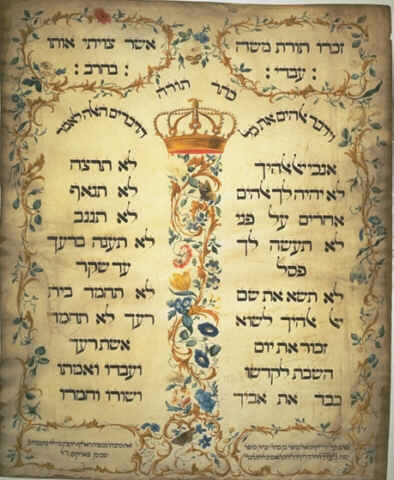
“A Decalogue for Peace in the Middle East”

Jesuit Priest, Samir Khalil Samir, who was born in Egypt, is a polyglot who speaks Arab, Italian, and French, and who lived for many years in Lebanon, where he is still a professor at the Université Saint-Joseph in Beirut. He also teaches at the Pontifical Oriental Institute in Rome, as well as at the Jesuit theological faculty in Paris. He is the founder and director of the Centre de Documentation et de Recherches Arabes Chretiennes, located at the Université Saint-Joseph.

Fr. Samir is well-known and respected by the Holy Father, who called upon him to participate in last September’s Schülerkreis, an annual gathering of the Pope's former doctoral students in which they meet for two or three days to discuss a specific topic. Prior to his ascending the throne of Peter, these meetings were usually held in a monastery. Last year, and again this year, the symposia are held at Castel Gondolfo, the Pope's residence outside Rome, where popes traditionally spend the month of August. According to Fr. Joseph Fessio, SJ, a former student and participant, as paraphrased by John Allen, "the discussions are informal and free-flowing, sometimes stretching over dinner and into a few glasses of beer or wine." Fr. Samir participated in last year’s gathering as an expert on the Islamic understanding of God as derived from the Qur’an. The broader subject of the gathering was the role of Islam in secular societies. This year the group will discuss evolution.

In the wake of the recent hostilities in Israel and Lebanon, Fr. Samir has proposed "a Decalogue of Peace in the Middle East." The entire text can be read in English on the Chiesa web-site, an invaluable resource driven by veteran Vatican expert Sandro Magister: Fr. Samir: "A Decalogue for Peace in the Middle East. As Magister observes, Fr. Samir's document is "highly interesting to read" because he addresses forthrightly the great disruption caused in the region by the creation of the State of Israel in 1948, which was only made possible by the partition of Palestine, which displaced thousands. Lest a misunderstanding arise, Fr. Samir is committed to the legitimacy and on-going existence of Israel as a state. To that end he writes: "partition is a historical fact, born of an international decision. The existence of two states, Israeli and Palestinian, is an indisputable reality, legitimated by the United Nations. One cannot call it into question. All decisions were accepted as legal by the international community. That is why any solution to the conflict that does not completely respect the international legality of all the resolutions of the United Nations will not lead to peace. "

Below are the 10 points of Fr. Samir's "little" Decalogue, as published in Chiesa and translated by Fr. Wafik Nasry, S.J:

"1. Create a Palestinian state based on the international borders before the 1967 war (some final adjustments will have to be made, with common agreement between Israel and Palestine).

2. Grant the right of return to the Palestinians as was recognized by UN resolution 194 of the general assembly. This should be first recognized in principle, then a discussion of a limited return and compensation guaranteed by the international community for others should follow.

3. Israeli settlements could remain for a limited period (e.g. ten years) under Israeli sovereignty. The settlers will then have to decide whether to return to Israel or to remain under Palestinian sovereignty, as did the 160,000 Palestinians who have already decided to live under Israeli sovereignty.

4. Official recognition and exchange of ambassadors between each state of the Middle East (including Turkey, Iran, Syria, Iraq) is necessary. All nations must officially recognize the borders of the other states as final, and exchange ambassadors with these states.

5. Install a “robust” international force where peace is not yet fully achieved in order to control the traffic of weapons between nations; in particular between Israel and Palestine, Israel and Lebanon, Lebanon and Syria, Syria and Iraq, Iran and Iraq, Turkey and Iraq. This international force should be posted on the both sides of the international borders.

6. Help the various militarily weak states to develop sufficiently strong national armies to ensure the safety of their citizens and disarm all other groups, especially militias and settlers. At the same time, take steps to reduce military investments in the region and control military power.

7. The release of the prisoners of other states and ensuring their return to their proper countries with exchange agreements, in particular between Israel and Palestine, Israel and Lebanon, Lebanon and Syria.

8. The creation of an international commission to solve the problem of water resources in an equitable manner in this region is an essential condition for the development of peace and to reduce the cause of the frequent conflicts.

9. The creation of an international commission that would include Israel and Palestine to discuss the fate of the city of Jerusalem, which each state legitimately wishes to claim as its capital. Security, liberty, accessibility and freedom of movement must be guaranteed by an international accord for the entire city and all its holy sites, for they are a universal heritage and must be part of the international agreement.

10. Launch the project for a Middle East Union (MEU) among all the states of the region that are willing to live in peace. Establish legal, economic, political, military and cultural conditions for membership in the regional organization; organize meetings between states of the area; sign agreements of peace, bilateral or multilateral, for long periods (10 to 20 years). One will be able to find many guiding points for such a Middle East organization from the experiment of the EU."

Tragedy challenges God's love

No sooner did I finish my reflection on this week's second reading from Romans chapter 8 about the all-encompassing nature of God's...