Wednesday, September 13, 2006

"Praise and bless my Lord, and give thanks, and serve him with great humility."

The internet is vast. Much of it is a vast wasteland of useless information, idle chat and pornography. Yet, as all media, it is a valuable to way to get the word out. One of the joys of having a blog is to be able to direct interested people to places on the web that are good and edifying. To that end, I was deeply gratified this morning to find that Fr. Raniero Cantalmessa, O.F.M. Cap has an English-language website. This son of St. Francis is the preacher of the papal household, who belongs to my own, what another of my mentors, Deacon Owen Cummings, would call community of the heart. Like the books on Scripture by His Eminence Carlo Maria Cardinal Montini, SJ, Fr. Raniero's little books are treasures; his preaching is Spirit-filled.

In this day, when it is so much on the outs, Fr. Raniero remains a Catholic charismatic, who sees the charismatic renewal as way to evangelize those Catholics, especially in Latin America and Africa, who are drawn to charismatic forms of Protestantism. He also sees it as a powerful form of ecumenism. So, to my old and dear charismatic friends, Catholic and non-Catholic alike, you have a friend in high places, who has the ear of the Holy Father, who is a learned theologian, Church historian, and student of the Church Fathers. In other words, he has credibility.

If you want to wade into Fr. Cantalmessa's works, I recommend Sober Intoxication of the Spirit: Filled with the Fullness of God. I also recommend his little book entitled: Eucharist: Our Sanctification. If nothing else visit his website.

Prayer for a day in late Summer:


"Most high, all powerful, all good Lord! All praise is yours, all glory, all honor, and all blessing. To you, alone, Most High, do they belong. No mortal lips are worthy to pronounce your name.
Be praised, my Lord, through all your creatures, especially through my lord Brother Sun, who brings the day; and you give light through him. And he is beautiful and radiant in all his splendor! Of you, Most High, he bears the likeness.
Be praised, my Lord, through Sister Moon and the stars; in the heavens you have made them, precious and beautiful.
Be praised, my Lord, through Brothers Wind and Air, and clouds and storms, and all the weather, through which you give your creatures sustenance.
Be praised, My Lord, through Sister Water; she is very useful, and humble, and precious, and pure.
Be praised, my Lord, through Brother Fire, through whom you brighten the night. He is beautiful and cheerful, and powerful and strong.
Be praised, my Lord, through our sister Mother Earth, who feeds us and rules us, and produces various fruits with colored flowers and herbs.
Be praised, my Lord, through those who forgive for love of you; through those who endure sickness and trial. Happy those who endure in peace, for by you, Most High, they will be crowned.
Be praised, my Lord, through our Sister Bodily Death, from whose embrace no living person can escape. Woe to those who die in mortal sin! Happy those she finds doing your most holy will. The second death can do no harm to them.
Praise and bless my Lord, and give thanks, and serve him with great humility."
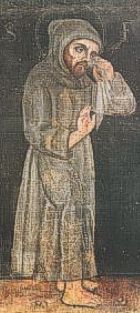
San Francesco d'Assisi's Canticle of the Sun

Tuesday, September 12, 2006

Pope Benedict- "a little Summa"

In addition to reading my humble and, by comparison at least, amateurish words on this week's daily readings as I conduct weekday Communion services at the request of a vacationing pastor (masses on Sundays), you can easily follow Pope Benedict's pilgrimage to his Bavarian homeland by linking to Rocco Palmo's wonderful blog, Whispers in the Loggia. It is to Rocco that I owe the link to the Holy Father's homily for yesterday's Mass in Regensburg, his adopted Bavarian home, where he taught theology up until Pope Paul VI elevated him to the See of Munich-Freising in 1977 and created him a cardinal of the Holy Roman Church later that same year.

As in all the words of this learned, humble, and deeply spiritual man, we hear an echo of the voice of the Master. Let us thank God that such a worthy man today walks in the shoes of the Galilean fisherman as Christ's Vicar on Earth! Let us pray for him and with him daily. Here is a snippet to whet your appetite:


"We are gathered here for a celebration of faith. But the question immediately arises: What do we believe? What does it mean to have faith? Is it still something possible in the modern world? When we look at the great Summae of theology compiled in the Middle Ages, or we think of the number of books written each day for or against faith, we might lose heart and think it is all too complicated. In the end, we can no longer see th forest for the trees. True enough: faith's vision embraces heaven and earth; past, present, and future; eternity- and so it can never be fully exhausted. And yet, deep down, it is quite simple. The Lord tells us so when he says to the Father: 'you have revealed these things to the simple - to those able to see with their hearts' (cf Matt 11, 25). The Church, for her part, has given us a little Summa in which everything essential is expressed. It is the so-called 'Apostles' Creed' . . . "

Year II 23rd Tuesday in Ordinary Time- "The Lord takes delight in his people"


Readings: 1 Cor 6,1-11; Ps 149, 1-6.9; Lk 6,12-19

This morning we continue reading through St. Paul’s first letter to the Corinthians and St. Luke’s Gospel. The theme for today’s readings is the nature and structure of the Church. In this morning’s Gospel we read of Jesus’ calling the twelve after spending the night in prayer on the mountain. It is significant that St. Peter comes first on the list, as he does in all the Gospels whenever the apostles are listed. Of course, this is indicative of the unique primacy given to Peter among the apostles and in the Church. The number twelve itself is significant because in the new Israel, which is the Church, the apostles correspond to the twelve patriarchs, the sons of Jacob, who was given the name Israel by the angel after wrestling with Jacob all night long. It is from the sons of Israel that the twelve tribes of Israel claim descent. All of this is enough to indicate Jesus, in his calling of the twelve, is establishing a new people.

After Jesus’ resurrection, it was the twelve who, at his command, took the Gospel "into all the world" (Mk 16,15/Matt 28,19-20). We see from Paul’s missionary activity that as the Church was established in various places, like Corinth, a structure was necessary, beginning with the apostles, who consecrated bishops, who, in turn, ordained priests and deacons. While in the primitive Church there was some variation in how the earliest communities were organized, establishing a structure was done in other ancient Churches, not established by Paul, who claim apostles as founders: the Church in southwestern India, founded by St. Thomas; the Churches of Egypt and Venice, founded by St. Mark; the Churches of Rome and Antioch, founded by Peter; the Church in Jerusalem, presided over by St. James, etc. After establishing his new people on the basis of the twelve apostles, at least in St. Luke’s chronology, our Lord then teaches his people the law they are live by, known in Luke as the Sermon on the Plain. This is Luke’s version of Matthew’s magisterial Sermon on the Mount. It is with this so-called sermon that our Gospel today end. Again, the parallel between Israel and the Church is made clear. Just as Israel was formed as a people and given the law, so, too, with the new People of God.

Picking up on this theme is St. Paul writing to the Corinthians. In the Church of Corinth we have a microcosm of the entire Church, even the Church in our own day to some extent. Paul exhorts his Christian brothers and sisters not to cause scandal to believer and unbeliever alike by taking their disputes and squabbles to civil courts. Ideally, according to Paul, if everyone is endeavoring to be the spiritual person he has been urging them to be, such disputes would be extremely rare, or even non-existent. In fact, he tells them, "it is in any case, a failure on your part that you have lawsuits against one another" (1 Cor 6,7). Stated simply, strife in the Church and among believers should be avoided, even to the point of suffering an injustice. As he wrote earlier in the letter, which we read last week, when urging the Corinthians to be "fools for Christ," in imitation of him and Apollos, when they were ridiculed, they should bless and when they were persecuted, to patiently endure (1 Cor 4,12).

Above all, Paul is concerned that strife in the Christian community that spills into civil courts is an obstacle to unbelievers. The apostle goes beyond how we should settle disputes that arise within the Christian community to all manner of behavior that is contrary to what Christ taught. He writes about those things that if done and not repented of and forsaken will bring damnation: fornication, adultery, and all manner of sexual immorality, drunkenness, theft, greed, and lying (1 Cor 6,9-10). After all, if we do not practice what we preach, and if we do not preach what the Lord Jesus taught, then we are indeed hypocrites, hollow people who heap damnation on ourselves.

How many of us know people who either do not believe, or who do not practice their faith because of the bad example set by believers of bad experiences they have had with professed Christians, with people like you and I who attend Church regularly and publicly identify ourselves as Catholics? Currently our Church suffers from a serious lack of credibility in our culture and society, which needs Christ so badly, because of the scandals of recent years, in which even many bishops are complicit, with some of the guilty parties refusing to acknowledge responsibility or to publicly repent of their sins of commission and omission.

In his characteristic fashion, St. Paul, at the end of this passage, reminds them and us that, prior to our following Christ, we used to do many of the things he justly condemns. More importantly he reminds us that there is forgiveness of the sins; "you have had yourselves washed, you were sanctified, you were justified in the name of the Lord Jesus Christ and in the Spirit of our God" (1 Cor 6,11). My brothers and sisters, there is forgiveness and cleansing in Christ. We should avail ourselves of it often, confessing our sins freely so that "we walk in the light" and "have fellowship with one another" (1 Jn 1,7). So let us, like the people in today’s Gospel, avail ourselves of the power that comes forth from our Lord Jesus Christ, which is the power to heal our broken and ailing souls in order to be the people he has divinely constituted us to be (Lk 6,19). To be a people in whom “the Lord takes delight” (Ps 149,4).

Monday, September 11, 2006

Year II 23rd Monday in Ordinary Time- 9/11: Justice & Mercy


Readings: 1 Cor 5,1-8; Ps 5, 5-7.12; Lk 6,6-11

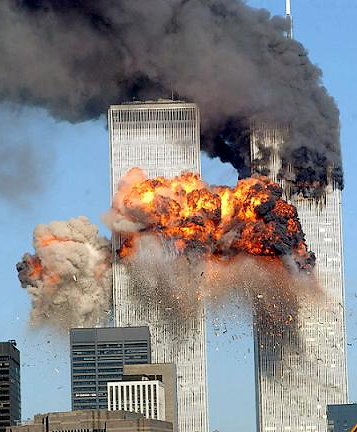
"Lead me in your justice, Lord," we ask in today’s Psalm response (Ps 5,8). The Psalmist also sings: "For you, O God, delight not in wickedness; no evil man remains with you" (Ps 5,4). Indeed, it is appropriate to call to mind the Lord’s justice on this fifth anniversary of 9/11. The Lord our God is just in all his ways. More importantly to us sinners, God is merciful. We certainly ask God’s mercy to be upon those who perished in the unspeakably evil attacks on the Twin Towers, the Pentagon, and the third plane that crashed in a field in Pennsylvania. We ask God’s healing mercy to be with those wives, husbands, children, mothers and fathers, sisters and brothers, and close friends who lost loved ones on that horrible day. But, in light of our faith, which finds its perfect expression in the teachings of Jesus Christ, what should our attitude be toward those responsible for these attacks? Their wicked acts are to be condemned without a doubt, but what about our attitude to those who mean us harm, our enemies? This question is not asked, like Jesus’ questions in today’s Gospel, rhetorically, with the answer being obvious. Neither is it asked in order to receive a ready-made answer; it is asked as a question for each of us to ponder in our hearts this day on which we remember a horrible evil perpetrated by human beings upon other human beings, as we ponder "man's inhumanity to man."

A key to a Christian response to these questions is contained in our Gospel this morning. As with Saturday's Gospel, Jesus is violating Jewish Sabbath observance by healing a man with a withered hand. Prior to doing this, our Lord asks the Pharisees, "is it lawful to do good on the sabbath rather than to do evil, to save life rather than to destroy it?" It is easy to imagine Jesus asking this question and waiting for a few awkward moments for a reply, while the Pharisees shuffled around, looked at their feet, and mumbled. In this instance he receives no reply. So, he goes ahead and heals the man’s withered hand (Lk 6,9-10). Like all the words and actions of our Lord, there are many lessons to be drawn from this episode, especially from his questions. Let us consider just two. Let us first consider his question about the lawfulness of doing good rather than do evil on the Sabbath. For the disciple of Jesus it is obligatory always and everywhere to do what is good and avoid what is evil. The second point is that, life being sacred, we are always obliged to save life. In other words, we are to be healers.

In order to heal we have to be healed. To be healed, in each of our cases, means to be forgiven. In order to be forgiven, we must forgive. To forgive requires mercy. In his Sermon on the Mount Jesus tells us, "Blessed are the merciful, for they will be shown mercy" (Matt 5,7). It is important to note that mercy does not cancel out justice. Because it does not sometimes in our fallen and sinful world justice requires resorting to the use of force. Our Lord tells us in his rhetorical question to the Pharisees it is better to save life than to destroy it. In the context of 9/11 and its aftermath, we must keep in mind that the ultimate goal of just war is to re-establish peace. More specifically, the peace established after the war must be preferable to the peace that would have prevailed if the war had not been fought. What this reinforces is that vengeance, which Paul, in concert with the Psalmist, tells us in Romans, is the Lord’s (Rom 12,19 ), plays no part in the Christian response to any evil, even one as horrific as the 9/11 bombings.

Regardless of where we stand with regard to certain "hot button" issues we know that peace and mercy begin with us. Therefore, we must practice both daily in all of our interactions, in our homes, in our places of work, and here in our parish, which should be a model of true justice brought about by mercy and resulting in peace. Because we have freely chosen to follow the way of the Lord Jesus, we are committed to acting intentionally in our efforts to adhere to the objective standards of morality clearly taught us by him. In other words, we obey Jesus because we love him (Jn 14,15 ). If our love for God is genuine, it leads to love of neighbor. Our neighbor, of course, is every person. Acting intentionally means knowing what our motives are. It also means knowing what our motives should be. This, in turn, requires us to pray, work, and cooperate with God so as to bring our will and our desires into conformity with Christ’s teachings.

So, while our faith enables us to discern what is good and what is evil, it also teaches us that we are sinners, who have done evil ourselves and who have been forgiven. God’s justice was satisfied in the act of ultimate mercy; Jesus Christ nailed to the Cross for our sins. Of all people, Christians understand that we must be mericful because we have received mercy. In a few moments we will pray the Our Father, the prayer taught us by our Lord himself. In this prayer we will ask God to forgive us our trespasses as we forgive those who trespass against us. Scripture tells us, "judgment will be without mercy to anyone who has shown no mercy; mercy triumphs over judgment" (Jas 2, 13). Let these reflections be the background against which we consider the questions raised by justice and mercy on this day during which remember so great an evil.

Saturday, September 9, 2006

Year II 22nd Saturday of Ordinary Time- "Fools for Christ"

San Francesco d'Assisi

Lest anyone panic, my homily this morning was a much shorter version of this rather long reflection on today's readings. It timed out at about 7 or 8 minutes. I came home and intended to tighten it up a bit before filing it, but it kept flowing. There must be something God wants to say to somebody reading this. Deo gratias!

Readings: 1 Cor 3,6b-15; Ps 145, 17-21; Lk 6,1-5

We continue this morning with our reading through St. Paul's first letter to the Corinthians. Despite appearances, Paul is still discussing what it means to be spiritual people, albeit it in a sarcastic, but loving manner. In this passage he uses the famous phrase "fools for Christ" (1 Cor 4,10), which many of us associate with St. Francis of Assisi and his early followers, to describe himself and his companion Apollos, as well as all of the apostles. He contrasts the foolishness of the apostles with the Corinthian Christians who, he sarcastically writes, "are wise in Christ" (1 Cor 4,10).

In describing himself and his fellow apostles as "fools for Christ" who are worthy of imitation, Paul writes about what it means to be a fool for Christ. In doing so he is careful not to go beyond what is written, which is just another way of saying that he and Apollos only teach what Christ himself taught. The behaviors Paul attributes to these "fools for Christ" are indeed rooted in Jesus' teachings, particularly in the beatitudes . According to the apostle, a fool for Christ when ridiculed blesses; when persecuted, patiently endures; when slandered, responds gently (1 Cor 4,12-13). This blends in nicely with the reading for this morning's prayer in the Liturgy of the Hours, taken from Romans, chapter 12, in which Paul exhorts the Roman Christians to "Bless those who persecute you; bless and do not curse them. Rejoice with those who rejoice, weep with those who weep. Live in harmony with one another; do not be haughty, but associate with the lowly; do not claim to be wiser than you are. Do not repay anyone evil for evil."

It is easy to see why the world finds such behavior foolish. Certainly each of us individually can attest to the wisdom of God being foolish to those living "in the flesh" by considering our own reactions when we are ridiculed, persecuted, or slandered. We want to defend and justify ourselves. Almost reflexively do we return evil for evil. Such reactions are very natural, which is to say they are visceral and automatic, but we are not slaves to our fallen nature because, as we read in first Corinthians at the beginning of the week, we have received the Spirit of God (1 Cor 2,12). As disciples of the Lord Jesus, empowered by the Holy Spirit, we are called and committed to a higher way, to cooperating with God's grace, which builds on our nature, to being transformed and matured into Christlikeness.

So, when Paul refers to the Corinthians as "kings" and as being "wise" he is lovingly, if sarcastically, chiding them in order to make his point, calling them, and us, to deeper conversion. That to be like Christ is to be accounted a fool is made clear from the very first chapter of this letter:

"The message of the cross is foolishness to those who are perishing, but to us who are being saved it is the power of God. For it is written: 'I will destroy the wisdom of the wise, and the learning of the learned I will set aside." Where is the wise one? Where is the scribe? Where is the debater of this age? Has not God made the wisdom of the world foolish? For since in the wisdom of God the world did not come to know God through wisdom, it was the will of God through the foolishness of the proclamation to save those who have faith'" (1 Cor 1,18-21).

In our passage today, Paul is elaborating even further on this theme. To be wise in Christ, he insists, means to receive in faith what is taught by Christ himself and by his "fools." According to the apostle, the wise person realizes that what s/he possesses is a gift freely given. But a gift is not a gift until it is received. Because what we have received from God, our loving Father, is a freely given gift, not something we earn or deserve, it is not something to be puffed up or haughty about. On the contrary, it should be humbling. After all, who are we that we deserve to be given the riches of God? On receiving God's gift, theologian Hans Urs von Balthasar wrote:

"Faith is a movement of the entire person away from himself, through the gift of grace; thereby he lays hold of the mercy of God given to him in Christ--in the form of the forgiveness of sins, justification, and sanctification. In this movement away from himself man has done all that he, through grace, can do; he has done all that God requires of him. Since his intention is to leave himself, without reservation, and hand himself over entirely, this movement implicitly contains all the 'works' that he will eventually do. They are not some second entity beside faith; if they are performed in a Christian spirit, they are only forms in which faith expresses itself."

Balthasar indicates by his allusion to "all the 'works' that [we] will eventually do, that faith, although a gift from God, is a way of life. Christ himself is "the Way" (Jn 14,6). Even before being known as Christians, followers of Jesus, the movement we now call Christianity, was simply known as "the Way" (Acts 9,2). Paul tells us in his letter to the Romans that the Way must be learned: "Everyone who calls on the name of the Lord shall be saved." But how are they to call on one in whom they have not believed? And how are they to believe in one of whom they have never heard? And how are they to hear without someone to proclaim him? " In this way faith becomes a verb, not a noun.

In addition to sending His beloved Son, God, our Father, sends others who teach us the faith, not just by their words, but more powerfully by their manner of life- those who walk the walk. These are the people, the women and men, we must seek to be like insofar as they are like Christ. Of course, exemplars of the Gospel par excellance are the saints. For our communion extends beyond this world into eternity. The saints are powerful intercessors on our behalf, if we will invoke them. Yesterday, on the Feast of the Nativity of the Blessed Virgin Mary, we discussed briefly three dimensions of our life of worship and devotion: latria, hyper-dulia, dulia. It is the last of these that is the theological term for the veneration, honor, and respect we pay to the saints. I daresay we all have a patron saint, baptismal patron, a confirmation patron, or a saint whose intercession has been beneficial to us. Invoke them daily, ask them to intercede for you, study their lives. By not doing so you forfeit much treasure lavished on us by God, who, as our loving Father, wishes to give us all He has and is.

In today's Gospel Jesus speaks powerfully to the manner of Christian life by his violation of Jewish Sabbath observance. By invoking the example of David and his men eating the bread of offering, reserved for the priests, in their hunger, our Lord tells us that, at root, following Him is not about keepingthe rules. Our Holy Father further highlights this teaching in his encyclical Deus Caritas Est , by writing, "Being Christian is not the result of an ethical choice or a lofty idea, but the encounter with an event, a person, which gives life a new horizon and a decisive direction" (DCE, 1). Those we seek to emulate, the holy women and men both past and present, are those who have encountered our resurrected and living Lord, Jesus Christ. This encounter has given their lives a new and "decisive direction." By decisively turning (to turn around, or change one's mind is the meaning of the Greek word metanoia, usually translated in English Bibles as "repent") in this direction, they chose the narrow path that led to them into beatitude, from whence they can intercede for us.

It is not too much to say that many of us have encountered our resurrected Lord. So, let us ask ourselves, as we prepare to encounter Jesus in the most intimate way in the Eucharist, what difference is our encounter making in our lives today? Let us probe a bit deeper and ask what difference should our encounter with the living Christ be making in our lives? Am I sharing the gift I have been graciously given, or am I prideful and puffed up about it? Does the gift of Jesus Christ make us humble and cause us to give thanks, which is the meaning of Eucharist, always to the Father for having found the Pearl of Great of Price?

It is by asking ourselves these questions frequently and answering them honestly before God both in our private prayer and in our sacramental encounter with Christ in confession that we heed what our Lord and his apostle, St. Paul, teach us. So, on this day as we prepare to celebrate that little Easter we call Sunday, may we be more open to receiving more of the infinite gift that our loving Father wants so desperately to give us- His love, which is His very self. Christ invites us today into his foolishness of which Michael Card sings so beautifully:
"When we in our foolishness thought we were wise/
He played the fool and He opened our eyes/
When we in our weakness believed we were strong/
He became helpless to show we were wrong/
And so we follow God's own fool/
For the only the foolish can tell/
Believe the unbelievable/
And come be a fool as well"

Friday, September 8, 2006

Well it's got to be a Choc-O-late Mary


I came across the story of the Blessed Virgin making an appearance in chocolate in California this morning on what very well might be my favorite blog, Rocco Palmo's Whispers in the Loggia. It put me in mind of a Tom Waits' song, Chocolate Jesus, from his magnificent album Mule Variations. I find Waits' somewhat irreverent song strangely Eucharistic. Here's the chorus:


Well it's got to be a chocolate Jesus
Make me feel good inside
Got to be a chocolate Jesus
Keep me satisfied


Lest ye be unduly offended; follow the link and read all the lyrics. If that isn't enough, do yourself a big favor and begin acquainting yourself with the work of Tom Waits. In that way you will understand his, admittedly, strange take on the world, including his quirky spirituality.

Feast of the Nativity of the Blessed Virgin Mary

Readings: Mi 5,1-4; Ps 13, 6; Mt 1,18-23

Today we celebrate the birth of the Blessed Virgin, the Mother of God, Mary Most Holy, who was conceived without original sin in order to be able to carry God the Son, the Second Person of Most Holy Trinity in her womb, to be the privileged channel through whom God became man. Today’s Gospel makes clear Mary’s purpose as well as the crucial role she plays in God’s plan of salvation. We celebrate this feast less than a month after celebrating our Blessed Mother’s glorious assumption into heaven at the end of her life, which calls us to pray for the grace of a joyful death. To die joyfully is to die in the friendship of Christ, the Virgin Mary's son.

Mary’s conception without sin (i.e., Immaculate Conception) was dogmatically defined by Pope Pius IX in the Apostolic Constitution Ineffabilis Deus, promulgated on 8 December 1854. In essence the dogma, which must be believed with divine and Catholic faith, pronounces that the Blessed Virgin Mary "in the first instance of her conception, by a singular privilege and grace granted by God, in view of the merits of Jesus Christ the Saviour of the human race, was preserved exempt from all stain of original sin." This means that Mary was conceived by her parents, who, according to tradition are known as Joachim and Anna, in the normal way children are conceived, unlike Mary’s conception of Jesus by the Holy Spirit, which is also a unique and singular event. Her unique role in the economy of salvation is recognized in the role she plays in our Catholic worship and devotional life. First there is latria, which is worship due to God alone. Then there is dulia, or the veneration we give to the saints. In between these two is the category of hyper-dulia , which is exactly what it sounds like, super veneration. Alone in this category, between God and the saints, is our Blessed Mother, Mary.

It is important not to wax too romantic about Mary’s life and what her "Yes" to God meant for her in practical terms. Her lot was not without suffering, fear, and anxiety. Our Gospel this morning makes this very clear. We read in Matthew that Mary found herself “with child through the Holy Spirit.” Since she was with child prior to being married to Joseph and going to live with him, it is easy to see why Joseph initially reacted in the way he did, seeking to break off their betrothal until what had happened was made known to him by a divine messenger. While confident, no doubt, that God is trustworthy, it is difficult to imagine that Mary experienced uncertainty, anxiety, and even some fear about her predicament, especially about how it might appear to others. It is quite clear from this passage that the fact she was with child “through the Holy Spirit” was known only to Mary and Joseph. It is safe to assume that everybody else thought, as Mary became more visibly pregnant, the child she was carrying and gave birth to, was Joseph's child.

What does this mean for us poor banished children of Eve? As all mysteries of the faith it means many things. However, in basic terms, it means that by recognizing Mary’s crucial role in the economy of salvation, we also recognize her as a model for our own faith. It is no exaggeration to say that Mary was the first Christian due to her acknowledgement of Jesus, her Son, as the Messiah promised to and long awaited by Israel. Her magnificat clearly indicates this when she concludes her hymn of praise: “He has come to the help of His servant Israel, for he has remembered his promise of mercy. The promise he made to Abraham and his children forever.” Mary’s whole life was a “Yes” to God. She answered “Yes” to God without counting the cost, without worrying about the consequences because she trusted God, knowing that He is love and also knowing that God’s ways are not human ways. As followers of Jesus Christ we are called to do the same in all of the circumstances of our lives.

Secondly, now as then, Mary brings Jesus to us and us to Jesus. As Blessed Teresa of Calutta, also known as Mother Teresa, would say when asked by non-Catholic Christians about her devotion to Mary, “No Mary, no Jesus.” We can expand on this and say K-N-O-W Mary,
K-N-O-W Jesus. Therefore, we should trust in her intercession and call upon her often. For indeed she did a bear a son, just as the angel promised. Jesus Christ, the son of Mary, is Emmanuel; God with us. He is with us in no way more powerfully than in the Eucharist.

So, dear friends in Christ, pray the rosary today and, in observance of this Feast and in light of today's Gospel, despite the fact it is Friday, a day on which we usually meditate on the Sorrowful mysteries, contemplate the Joyful mysteries.

Tragedy challenges God's love

No sooner did I finish my reflection on this week's second reading from Romans chapter 8 about the all-encompassing nature of God's...